What Age Car Can My Number Plate Go On? Explained
Not all number plates can go on every car. In the UK, strict rules govern which plates match which vehicle ages. This guide explains how to check compatibility, avoid fines and legally assign private plates so you can personalise your car without risking MOT failures or insurance issues.
Last updated: 10th March, 2026

Award-winning CEO driving growth and social impact across automotive, recycling, and technology-led enterprise platforms.
Listen to this story
If you’re in the market for a new vehicle and you’re thinking about transferring your private number plate, it’s natural to wonder: What age car can my number plate go on?
You can’t just stick any plate on any vehicle. There are clear rules in the UK about which number plates can go on which cars. Putting the wrong plate on your vehicle isn’t just a cosmetic issue; it can actually make the car illegal to drive.
Whether you’re transferring a personalised registration or trying to make your car look newer, this guide clears up the confusion around number plate age restrictions, legal requirements and the key dos and don’ts.
What's in this article
UK number plate rules: a quick overview
In most cases, you can put a private number plate on whichever car you have so long as it’s registered with the DVLA, road-legal, taxed (or SORN’d) and has a valid MOT.
But there are restrictions:
- You can't make the car appear younger. The plate's age identifier must not be newer than the vehicle’s age.
- No Q‑registered vehicles. These are cars of uncertain age/identity and can’t take private plates.
- No MOT-exempt vehicles. Vehicles like tractors or steamrollers cannot receive private plates.
There are also other small technicalities, which we’ll dive into later.
How to know the age of a number plate
To understand what age car a number plate can go on, you first need to know how old the plate itself is. UK number plates are issued in a few different formats. Each one contains a clue about the year it was first registered.
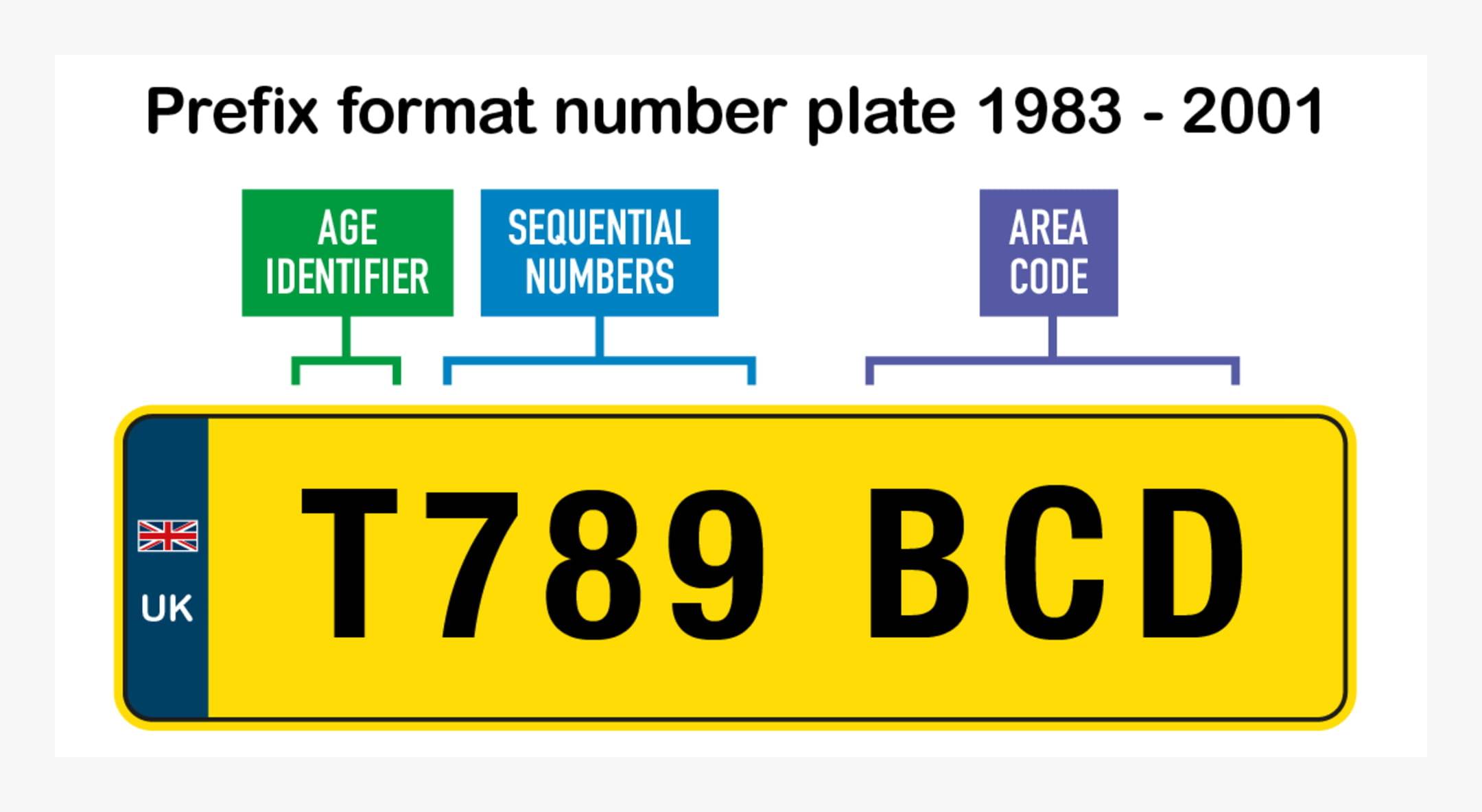
Prefix plates (1983–2001)
Prefix plates start with a single letter that shows the year of registration. For example, P123 ABC = 1996 (P = 1996). These plates run from A (1983) to Y (2001), skipping the letters I, O, Q, U and Z to avoid confusion.
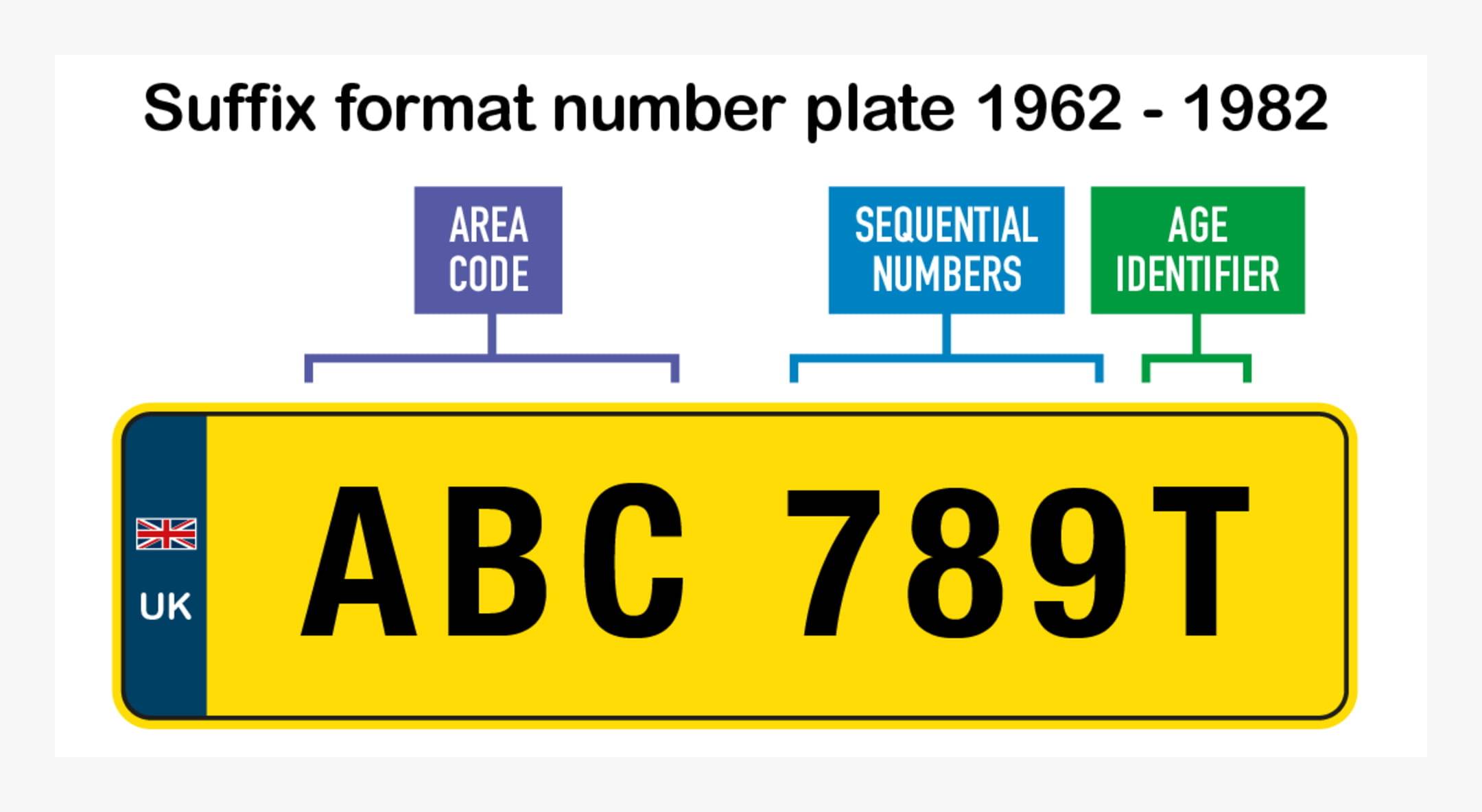
Suffix plates (1963–1982)
Suffix plates are the opposite — the letter comes at the end to show the age. For example: ABC 123P = 1975 (P = 1975). They were used before prefix plates and follow the same A-Y structure (again, skipping certain letters).
Current format plates (2001–present)
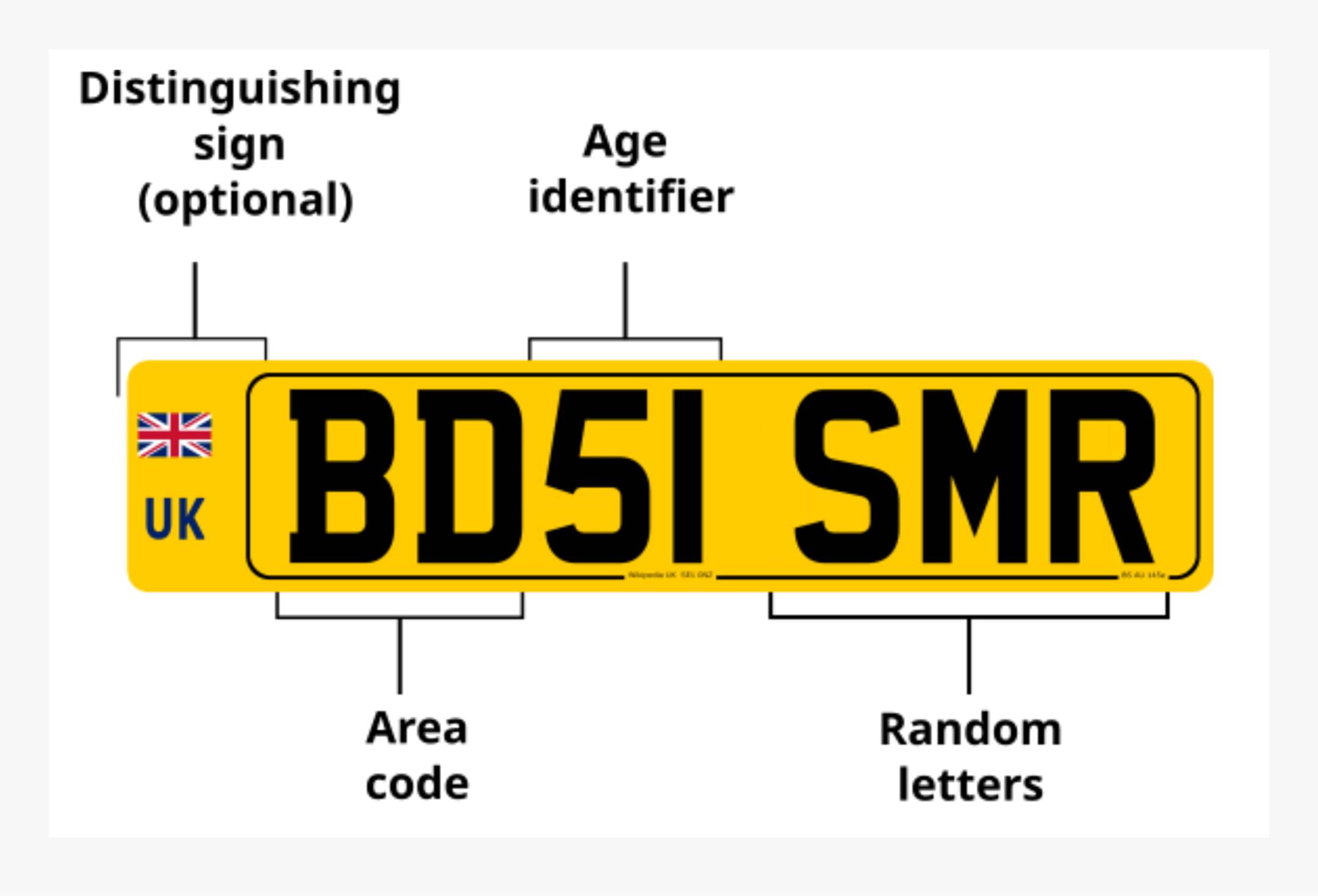
These are the plates we use today. Examples include AB51 CDE and BD73 XYZ.
The two numbers in the middle show the age:
- 51 = registered between Sep 2001 and Feb 2002
- 23 = registered between Mar and Aug 2023
- 73 = registered between Sep 2023 and Feb 2024
The first two letters identify the region the car was registered in and the last three are random.
What the experts say

Anthony Sharkey

Examples of common UK plates and their car age limits
To help you grasp the concept of different number plates and whether you can put them on your car, here are five different examples:
1. Plate: AB51 XYZ
- Format: Current (2001–present)
- Year indicator: 51 = Sep 2001 – Feb 2002
- Earliest vehicle: A car registered on or after 1 September 2001
2. Plate: HG23 MNO
- Format: Current
- Year indicator: 23 = Mar 2023 – Aug 2023
- Earliest vehicle: A car registered on or after 1 March 2023
- Can it go on a 2022 car? No — that would make the car appear newer
3. Plate: P456 ABC
- Format: Prefix (1983–2001)
- Year indicator: P = 1996
- Earliest vehicle: A car first registered on or after 1 August 1996
4. Plate: DEF 789S
- Format: Suffix (1963–1982)
- Year indicator: S = 1977
- Earliest vehicle: A car first registered on or after 1 August 1977
5. Plate: XYZ 1 (Dateless private plate)
- Format: Dateless (pre-1963 or personalised)
- Car age limit: No restriction — can go on any age vehicle
- Why? Because it doesn’t give away the age of the car
Can you put a private plate on any car?
Not exactly. While private number plates offer flexibility and style, there are still rules you need to follow. The main thing to remember is this:
You can’t use a private plate to make your car look newer than it actually is.
This rule applies no matter how much you paid for the plate or how unique it is.
Rules for assigning personalised or private plates
Here’s what you can and can’t do when it comes to putting a private registration on your car:
- You CAN put a dateless or older plate on any age vehicle. For example, a 2005 car can legally carry a 1996 (P-reg) plate or a dateless plate like H1 NDU.
- You CAN assign a private plate to a leased or financed car. But you’ll need the finance company’s permission first, since they technically own the vehicle.
- You CAN transfer private plates between cars. As long as both vehicles are registered with DVLA and meet roadworthy standards, it’s all good.
- You CAN retain a number plate for future use. If you’re not ready to assign it, you can keep it on a retention certificate for £80.
- You CAN’T put a newer plate on an older vehicle. For example, you can’t put a ‘73’ plate (Sept 2023) on a car registered in 2020. That would be classed as misrepresentation.
Which plate can go on your vehicle?
Can a newer plate go on an older car?
No, you cannot put a newer registration on an older vehicle under any circumstances.
If your car was first registered in 2015, you can’t assign it a plate like 23 (Mar - Aug 2023) or 73 (Sep 2023 - Feb 2024). That would falsely suggest the car is newer than it is, which makes it possible for sellers to trick buyers into paying more for the “newer” car.
You can, however, put:
- A plate from the same year (e.g. 15 or 65)
- An older plate (e.g. a P prefix from 1996)
- A dateless private plate (e.g. A1 XYZ)
So long as it doesn't give the car a newer appearance than its actual registration date, you're in the clear.
What happens if you break the rules?
If you put an incorrect plate on your car, such as one that makes it appear newer, the DVLA will not approve the assignment.
Here’s what can happen:
- DVLA will reject your application to assign the plate.
- If already fitted, you risk fines, MOT failures and even having the plate withdrawn.
- The car could be classed as incorrectly registered, which could invalidate your insurance.
- You’ll struggle to sell or legally transfer the vehicle later on.
Properly matching plate age vs. car age
The safest way to stay on the right side of the law is simple: Make sure the plate you assign is from the same year as your car or older.
Got a 2018 car? You can use a 2018 (18 or 68) plate or any older plate (e.g. 15, P, XYZ 1). Got a 2022 car? You can’t use a 2023 (23 or 73) plate or any future-dated plate.
Plate transfers and retention: what you need to know
Private number plates can move with you from car to car or stay with you when you sell one, but only if you handle the transfer or retention properly.
Transferring a plate
You can transfer a private plate from one vehicle to another as long as:
- Both vehicles are registered with DVLA.
- Both have valid MOTs and are taxed (or are declared a SORN).
- The new vehicle meets the age eligibility for that plate.
You’ll need to fill out a V317 form (or do it online) and pay a £80 transfer fee.
Putting a plate on retention
If you’re selling your car or just not ready to assign the plate, you can put it “on hold” using a V778 retention certificate.
This means you keep legal ownership of the plate and can assign it to another vehicle later. The certificate lasts 10 years and can be renewed. The cost is also £80 and you can apply online via the DVLA website.
Special cases and exceptions
Most cars follow the standard number plate rules. In the case of cherished plates, imports and Q-plated vehicles, however, the usual age restrictions work a bit differently.
Cherished plates and their rules
Cherished plates are older or highly sought-after registrations, like A1, 1 AB or personalised formats like H1 NDU (which just sold for £112,010 at auction).
The good news is that they’re usually dateless, meaning they don’t indicate the car’s age. This makes them legal to assign to any age vehicle, old or new.
That said, they still must be issued by DVLA or transferred through a DVLA-recognised service. And you’ll need a V750 (certificate of entitlement) or V778 (retention document) to assign them. On top of that, spacing and font must still follow number plate display regulations.
Imported vehicles: which plates can you use?
If you’ve imported a car into the UK, assigning a number plate depends on how well the DVLA can verify its age. If you have proof of the original registration (e.g. the other country’s official paperwork or manufacturer documents), DVLA will assign a year-based UK plate and you can then put a matching or older private plate on the vehicle as normal
But if you can’t prove the age of the vehicle, that’s when the rules change…
Q plates and kit cars: how age is determined
Q plates are issued to vehicles where the age or identity is uncertain. These are typically rebuilt classics or kit cars, heavily modified vehicles and imports with no verifiable history.
The DVLA will assign a Q-prefix plate like Q123 ABC, which permanently identifies the car as having unknown origins.
Important things to note:
- You can’t put a private plate on a Q-registered vehicle.
- The ‘Q’ plate stays with the vehicle for life.
- MOT stations and insurers treat Q-plated vehicles differently, so double-check in advance.
For kit cars, if you can prove the year of manufacture and meet DVLA’s build rules, you may be able to get a regular age-related plate instead. But it’ll require a detailed inspection.


How to check if a plate matches your car
The last thing you want is to waste money on a plate you can’t use. That’s why, before you commit to assigning a plate, you need to be 100% sure it’s legal for your vehicle.
DVLA number plate check tools
This is the best place to start. The DVLA offers free services to help you:
- Check your car’s original registration date: Use the DVLA Vehicle Information Checker to see exactly when your car was first registered. This tells you the latest plate it can legally carry.
- Confirm plate availability and validity: If you’re buying a plate from DVLA Auctions or directly via their Personalised Registrations site, the system will automatically prevent illegal assignments, like newer plates on older vehicles.
Online services for plate compatibility
If you’re buying from a third-party dealer or private seller, they might offer plate compatibility tools on their websites. This is something we offer as a courtesy for anyone buying a new registration through our marketplace.
- Enter your car’s reg number
- See if the plate you want is legal to use
- Get instant confirmation before buying
Easy as can be.
Documents you need to apply
When assigning, transferring or retaining a number plate, you’ll need to provide the right documents to the DVLA. If you don’t, your application won’t go through.
If you’re assigning a private plate to a vehicle:
- V5C logbook (the vehicle must be in your name and registered with DVLA)
- V750 (Certificate of Entitlement) if you bought the plate new, or V778 (Retention Certificate) if you’re reusing an old plate
- MOT certificate (if the vehicle is over 3 years old)
- Vehicle must be taxed (or declared SORN)
Apply online via the DVLA’s plate assignment portal or by post using form V317.
If you’re putting a plate on retention (to use later):
- V5C logbook for the car you’re removing the plate from
- £80 fee (payable online or by post)
- Application via DVLA
Once approved, DVLA will send you a new logbook showing the replacement (original) plate and a V778 retention certificate, which you can use to assign the plate again in the future.
Can I transfer my plate to a friend’s older car?
No. It doesn’t matter who owns the car, the DVLA rules are clear: you cannot assign a number plate to any vehicle that would make it appear newer than it actually is, regardless of whether the car belongs to you, a friend, a family member or even a business.
The same rule applies whether you're selling, gifting or transferring the plate. So while you can transfer a plate between people (assuming DVLA processes the assignment correctly), the vehicle itself must still meet the age requirement for that registration.
Will a mismatched plate affect my MOT or insurance?
If your number plate doesn’t match the age of the vehicle, your car is considered incorrectly registered by the DVLA. This triggers MOT failure, invalidates your insurance and potentially leads to fines and legal issues.
MOT testing centres check the vehicle’s registration details against DVLA records. If they don’t match (for example, the car looks newer than it is), it may be flagged or refused testing altogether.
Insurers rely on your vehicle’s registration to identify its make, model, age and history. A mismatched plate confuses them, invalidates your policy and can even void a claim if they think you're concealing the car’s true identity.
You could also face DVLA penalties. And you’ll lose the right to use the plate, which means you’ll have to re-register the vehicle properly, which costs you time and money.
How do I correct a mistake after a plate is assigned?
If you’ve accidentally put the wrong plate on your car, you don’t need to panic, but you do have to act quickly.
- Contact the DVLA immediately. Explain the mistake. You may be able to resolve it without penalties if it was an honest error and the vehicle hasn’t been driven.
- Remove the incorrect plate. You’ll either reassign the original plate (if you still have the rights to it) or request a new plate via DVLA.
Reassign the correct plate (or put it on retention). If you’ve lost rights to the original plate, DVLA will usually reissue a new age-appropriate reg. - Do as you wish with the other plate. You can assign the private plate to a newer vehicle instead, put it on a retention certificate, sell it or just get rid of it.
- Update your MOT, insurance and tax records. Once corrected, verify all the other systems reflect the change. Don’t forget your insurer and any finance or leasing companies.
Final thoughts
Putting a number plate on your car might seem straightforward (and it is). But there are strict rules around matching the plate’s age to the vehicle’s age. You can make a car look older all you want, but never newer.
Whether you're assigning a private plate, transferring one to a friend or just checking if a registration is legal for your vehicle, always use the DVLA’s tools and follow the age rules. Do your research before you buy a new reg, otherwise you risk wasting your money.
Stick to this and you'll avoid MOT issues, insurance problems and fines while still enjoying a personalised plate that makes your car stand out for the right reasons.
About Car.co.uk

Share on
Latest news & blogs