






What does our free MOT check include?





MOT rules, statuses and exemptions


Best price given for your car in 30 seconds


Why is it important to check MOT history?






Which vehicles are MOT-exempt?



How the MOT check works


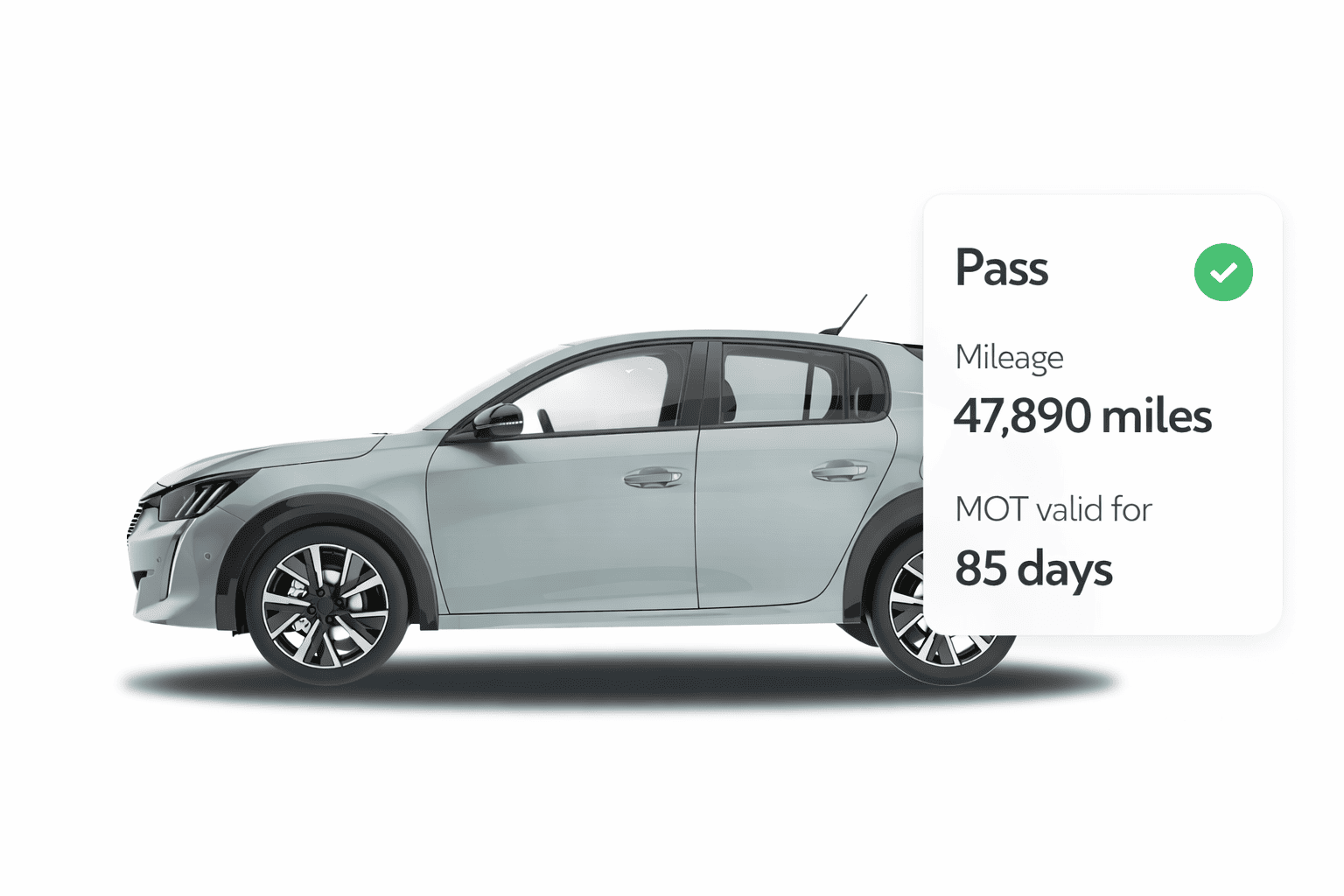
What’s included in your free MOT check
Why it’s important to check your MOT

What is checked during an MOT test?




How to book an MOT test
- Find a DVSA-authorised test centre near you. To spot one, look for the three blue triangles logo outside the garage.
- Book at most a month before your current MOT expires so your new certificate runs from the old expiry date.
- Choose a date and time that works for you. Most centres offer online booking via their website.
- Bring the V5C logbook if this is your car’s first MOT, or if it’s the first MOT since a number plate change.
- On the day, drop the car off and wait. The test typically takes around 45 minutes to an hour to complete.

Related MOT guides





MOT history FAQs

An MOT history check is a free lookup tool that shows the full MOT record for any UK-registered vehicle. Enter a reg plate and you'll instantly see every test the car has ever had, pass or fail, along with mileage readings, advisory notices and expiry dates.
The data comes directly from the DVSA, so it's the same information held on the official government records. The process takes about three seconds and tells you a lot about a vehicle's past.
A standard MOT test takes around 45 minutes to an hour for most cars. That's just the test itself, though. If your vehicle fails and needs repairs on the spot, it'll take longer depending on what needs fixing. Most garages let you wait on site, so it's worth bringing something to do.
No, driving with an expired MOT is illegal and you risk a fine of up to £1,000, potential penalty points and your insurance being voided. The only exception is driving directly to a pre-booked MOT test appointment. If you're caught anywhere else, the fact that you "didn't realise it had expired” won't help you.
It’s also worth mentioning that if your MOT isn’t valid and has a ‘dangerous’ defect, the potential fine increases to £2,500. And you will find yourself carrying serious liability if you are involved in an accident, whether you’re the one who’s at fault or not.
An MOT garage is legally allowed to charge no more than £54.85 for a car MOT, though many garages charge less to stay competitive, and deals under £30 are somewhat common. The DVSA sets this maximum, so if you see a garage charging more, they’re breaking the law.
Keep in mind that this is just the cost of the test itself. If your car fails, repairs are priced separately. Shopping around is worth it, just make sure the garage is DVSA-authorised.
Getting caught without a valid MOT starts with a £100 fixed penalty notice, but fines can reach up to £1,000. If your vehicle has previously been flagged with a 'dangerous' defect, that rises to up to £2,500, plus three penalty points and a potential driving ban.
On top of all that, driving without a valid MOT voids your car insurance, which means any accident becomes entirely your financial problem, and you could face a separate charge for driving without cover.
Yes, you can view your MOT history online for free at car.co.uk. Just enter your reg plate and you'll get instant access to your full MOT record, including past test dates, results, advisory notices and the mileage recorded at each test. There’s no need to make an account, no fee and the whole thing takes just a few seconds.
Yes, ANPR (Automatic Number Plate Recognition) cameras can instantly check your MOT status, and that’s how most people get caught driving without one. The cameras are linked directly to the DVLA database, so the moment one reads your plate, police or enforcement officers can see whether your MOT is valid. There's no getting away with it on a busy road.
According to DVSA data, the most common MOT failure reasons are lighting faults, suspension issues and tyre condition. Faulty lights alone cause around 1 in 5 failures, and they’re usually caused by blown bulbs.
Suspension faults are the second biggest culprit, and they’re commonly caused by worn shock absorbers or damaged springs. And tyres failing to meet the minimum 1.6mm tread depth come in close behind.
Brakes, windscreen wipers and emissions round out the most frequent issues, and most of those are easy to spot and fix before the test.
You can book an MOT test at whatever time your chosen testing centre has available. Opening hours vary by garage, with some offering weekend slots and others operating Monday to Friday only.
The one timing rule worth knowing: you can book up to a month before your current MOT expires and the new certificate will still run from the old expiry date, so you don't lose any time on it. If you book more than a month before expiry, the next renewal date moves up.
If your car fails its MOT, you'll get a refusal notice detailing exactly what needs fixing. From there you have a few options: get the repairs done at the same garage and benefit from a free partial retest, or take the car away and fix it elsewhere, though if you leave you'll pay for a full retest.
You can't legally drive the car until it passes, unless you're heading directly to a pre-booked repair appointment or your other MOT certificate is still valid, and there are no 'dangerous' defects. If there are, the car can't be driven at all; it needs to be transported.