DVLA Number Plate Auctions Explained: How to Bid, Win and Avoid Mistakes
Looking for a personalised number plate? DVLA auctions offer rare and dateless plates you won’t find anywhere else, but the process can be tricky if you're new. This guide explains how these number plate auctions work, what they cost and how to avoid common mistakes.
Last updated: 10th March, 2026

Award-winning CEO driving growth and social impact across automotive, recycling, and technology-led enterprise platforms.
Listen to this story
Personalised number plates are more popular than ever in the UK. Whether it’s your initials, a clever phrase or something that just looks good on your car, owning a private plate adds a touch of personality you can’t get any other way.
One of the best places to find unique registrations is through the official DVLA number plate auction. It’s not just for collectors or car dealers. Anyone can take part, and you might be surprised at what’s available (and how little it can cost).
This guide breaks down how DVLA number plate auctions work, what to expect and how to get involved.
What's in this article
- 1. What are DVLA number plate auctions, and how do they work?
- 2. What’s the difference between timed and live DVLA auctions?
- 3. Upcoming auction schedules and accessing the catalogue
- 4. The step-by-step number plate bidding process
- 5. Costs to expect beyond the winning bid
- 6. Proven strategies for successful bidding
- 7. What to do after you win a plate
- 8. 4 common mistakes and how to avoid them
- 9. Who should consider buying a number plate at auction?
- 10. How can I find out when the next DVLA number plate auction is?
- 11. How do I place a bid in a DVLA number plate auction?
- 12. Can I set a maximum bid for DVLA online auctions?
- 13. Are DVLA auction plates cheaper than buying directly?
- 14. Do DVLA auctions include rare or personalised number plates?
- 15. Is there a fee to participate in DVLA number plate auctions?
- 16. What happens if I win a plate at auction but change my mind?
- 17. How do I transfer a number plate won at auction to my vehicle?
- 18. Key takeaways
What are DVLA number plate auctions, and how do they work?
DVLA number plate auctions are official events where the Driver and Vehicle Licensing Agency sells off private registration numbers that haven’t been issued yet.
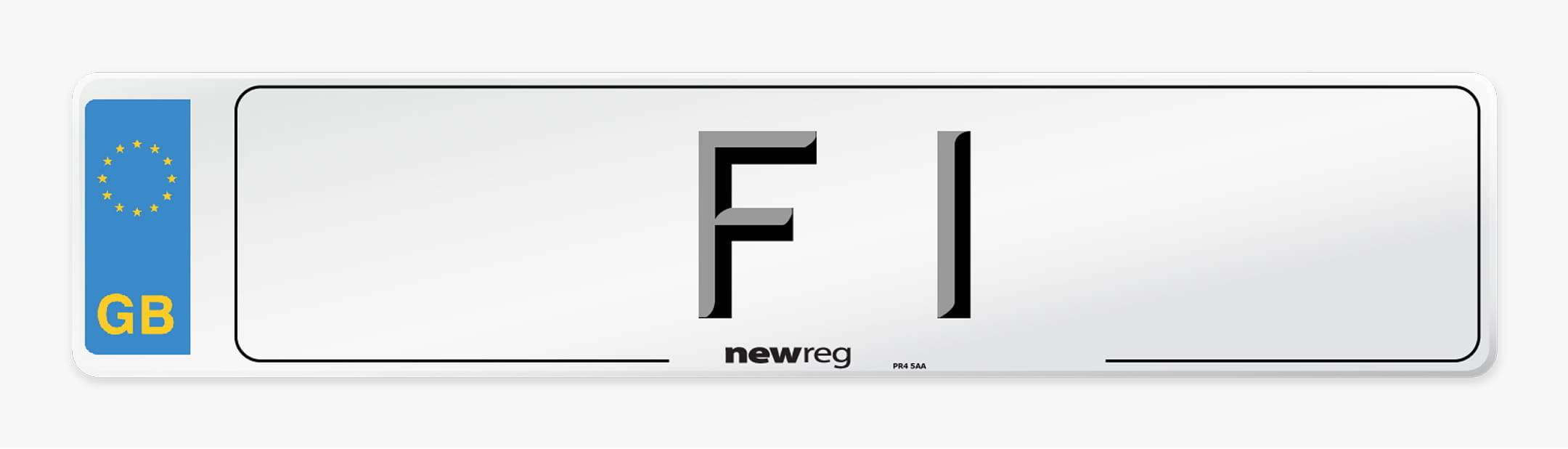
These plates are not second-hand. They’re completely unused and issued for the first time. Some are short and snappy (like 1 GO), while others spell out names, words or initials (JON 3S, LUV 1T, BOS 55S, etc.).
The auctions run entirely online on the DVLA Auctions site over 7 days. You place your maximum bid, then the system handles the rest, similar to eBay. If you win, you pay the hammer price plus VAT, an £80 assignment fee and a buyer’s premium of 7%.
The DVLA runs around five number plates auctions per year and offers hundreds of plates at each one. You can expect a mix of premium registrations and more affordable options starting as low as £200.
The DVLA’s role in personalised registrations
The DVLA is the only official source of new, government-issued number plates. It holds the legal rights to unissued registrations and releases them through auctions or direct sales. Buying from the DVLA means the plate is 100% legitimate, with no middlemen, markups or risk.
Types of auctions the DVLA hosts
The DVLA used to host in-person auctions at venues across the UK, but those were phased out. Everything now takes place through the DVLA’s official auction site, making it easier for anyone to take part, no matter where you live.
Types of plates auctioned off
DVLA auctions feature current-style, prefix, suffix and cherished (dateless) plates.
Current-style plates are the modern format you see today (AB12 XYZ).
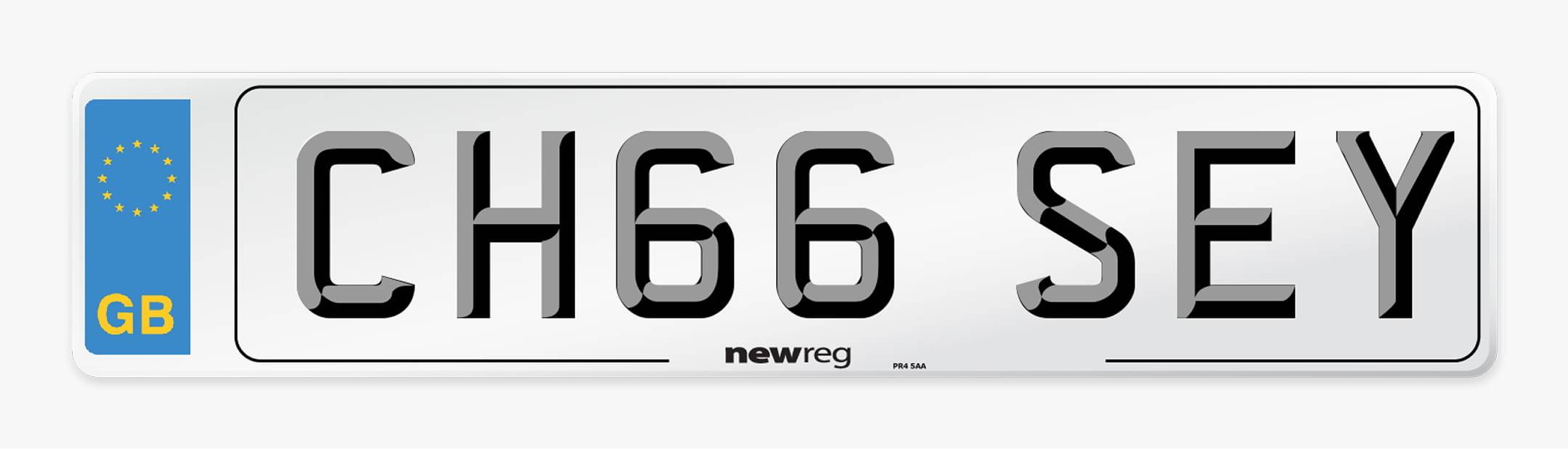
Prefix and suffix plates are the older styles with a letter at the beginning or end (J123 ABC or ABC 123J).
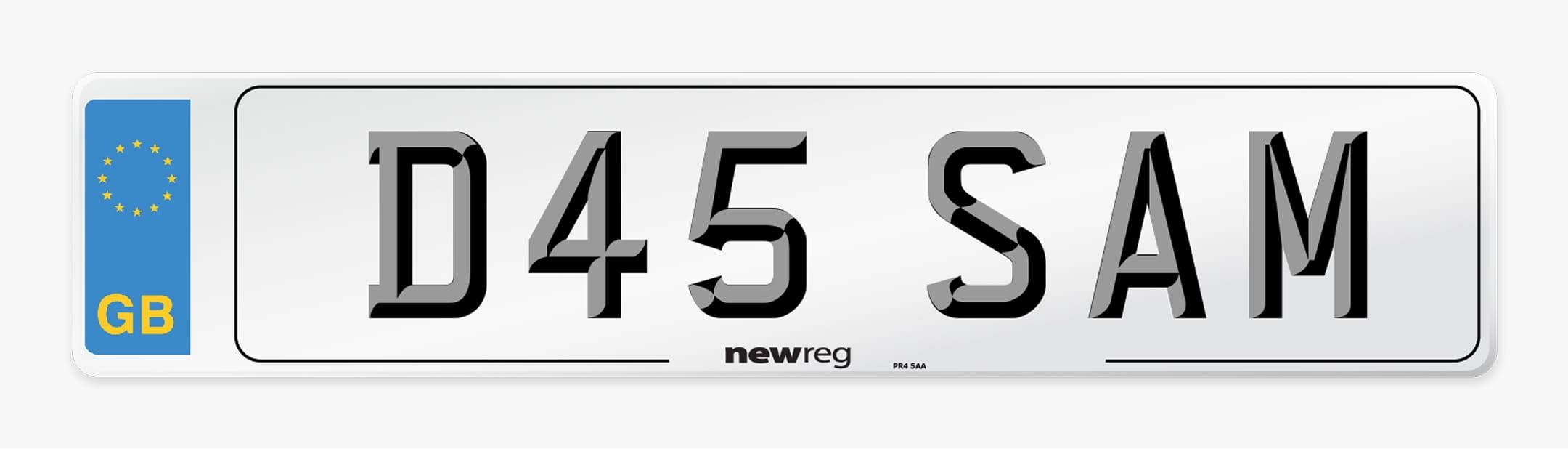
Cherished and dateless plates have no age identifier at all, usually shorter and more desirable (1 ABC, X7).
Dateless and cherished plates tend to attract the highest bids, especially when they form names, words or initials.
What’s the difference between timed and live DVLA auctions?
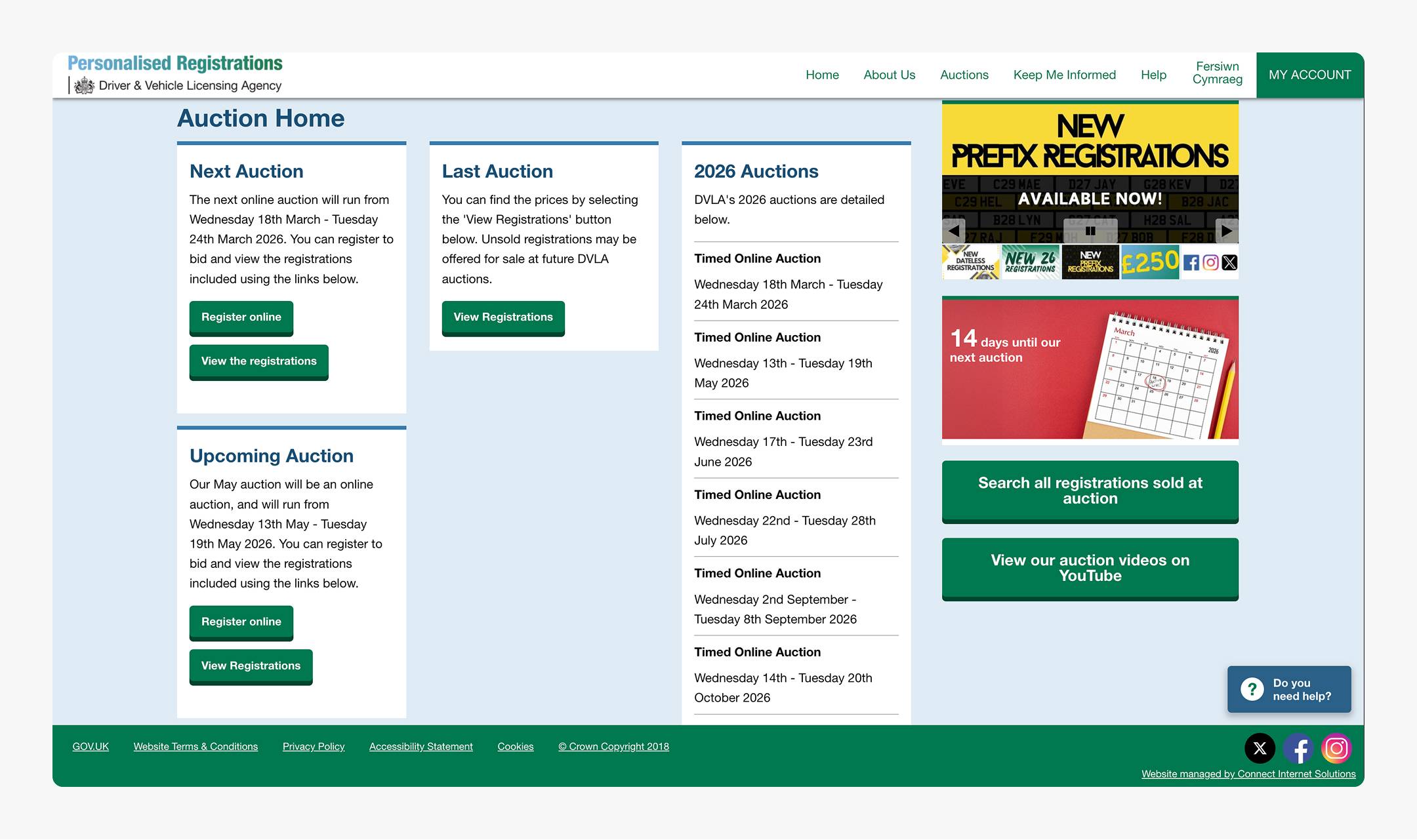
When you head to DVLA Auctions today, you’ll notice every event is labelled “Timed Online Auction”. That’s because live auctions are no longer running. It’s all switched to the online format.
Live auctions used to involve a real auctioneer and audience, either in-person or streamed online. But those have been phased out in favour of a more accessible, self-service model.
Timed auctions run over 7 days. Each number plate has a set closing time. If someone bids in the final minutes, the timer extends (usually by 1 to 2 minutes), preventing last-second sniping. You can place a maximum bid, and the system automatically increases your offer only when needed.
Upcoming auction schedules and accessing the catalogue
Auction frequency
DVLA holds nine timed online auctions each year for personalised number plates. They vary year over year, but you can easily see current and upcoming auctions right on the DVLA Auctions home page.
They run at roughly six- to eight-week intervals, so you have frequent opportunities to bid
Finding the right plate before bidding opens
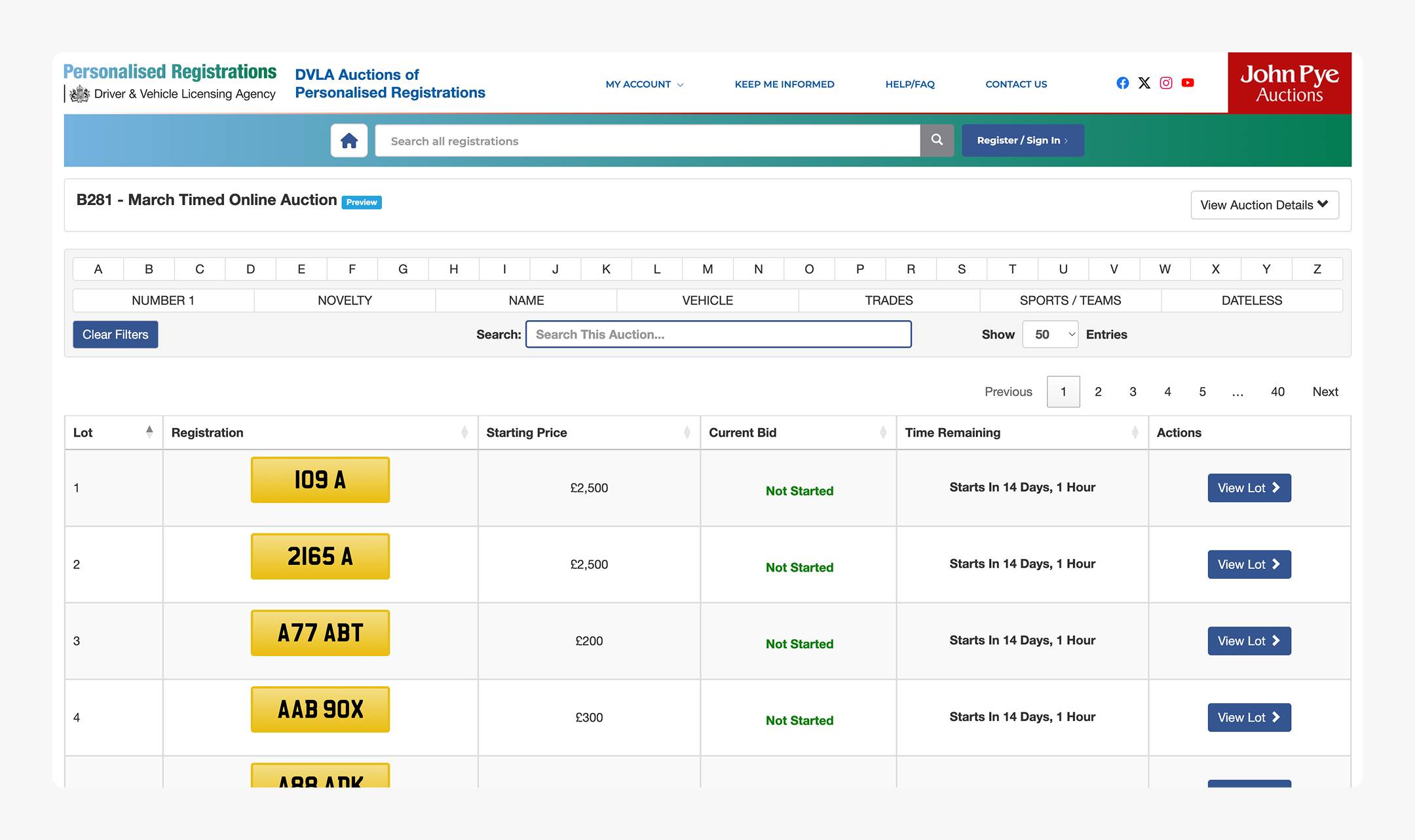
Each auction includes a catalogue of all number plates available that week. You can browse the online catalogue before bidding begins. It lists every plate on offer with reserve prices and formats.
Use the DVLA auction site to:
- Preview upcoming plates
- Research plate styles and likely value
- Decide which plates you want to bid on
Catalogues go live several weeks before each auction, giving you time to plan.
Registration and bidding access
To bid, you must register online with the DVLA auction platform.
You’ll need to:
- Create an account and verify your identity.
- Pay a refundable deposit (usually around £60 to £250).
- Submit a maximum bid for each plate you want.
Once registered, you can monitor bids and adjust your maximum bid until the auction closes. If you win, you pay the hammer price plus VAT, the 7% buyer’s premium and the £80 assignment fee. The DVLA then issues a V750 Certificate of Entitlement, usually within 14 days.
The step-by-step number plate bidding process
When you bid on a private number plate, there are a few moving parts you need to understand. You'll need to budget properly, know how timed auctions work and be ready to act quickly once the auction ends. Here's how the full process works, step by step.
1. Set your bidding budget.
Before you start bidding, know what you're prepared to spend. Every number plate has a starting price. This is usually between £200 and £2,000, but the final sale price can go much higher depending on demand.
Your total cost includes:
- The hammer price (what you win it for)
- VAT on the hammer price at 20%
- 7% buyer’s premium on the hammer price
- VAT on the buyer’s premium at 20%
- £80 assignment fee (to assign it to a vehicle or hold it)
Make sure to factor in all these extras when setting your maximum bid. What looks like a £2,000 plate costs £2,648 all-in.
2. Join the timed auction.
DVLA timed auctions are similar to eBay-style bidding. You can place a proxy (maximum) bid — the highest amount you’re willing to pay. The system will only raise your bid as needed, just enough to beat the next highest bidder.
- Each plate has a closing time.
- If someone bids in the last few minutes, the timer extends.
- This repeats until no one else bids, giving everyone a fair shot.
Lots of bidders wait until the final day, so expect the real action in the final hour.
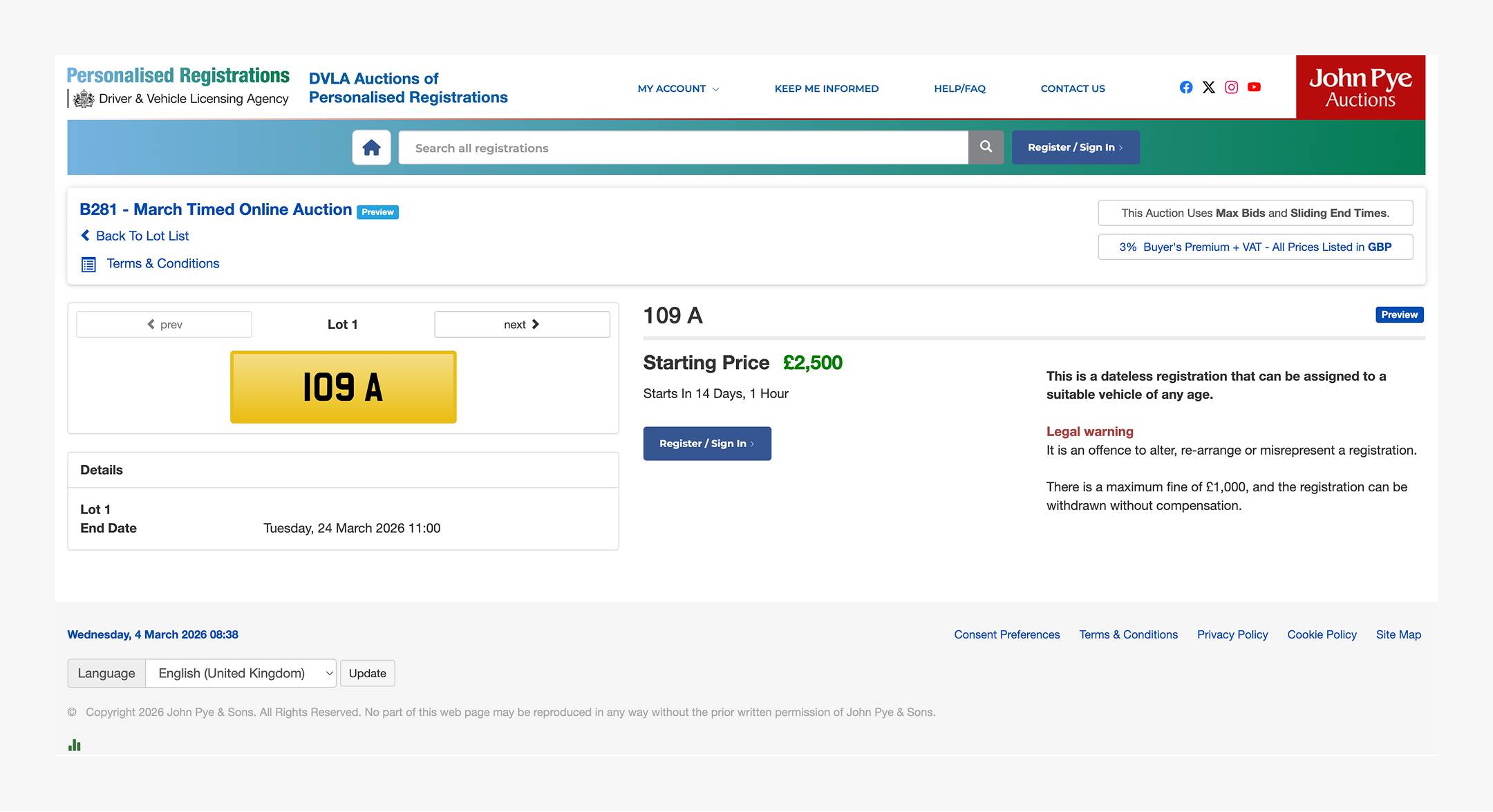
To get started, click on one of the registration numbers you like. You can see their starting and current prices, then decide whether that’s too high for you or not.
Once you’re there, all you have to do is log in and place your bid.
3. Win your new number plate.
If you win a plate, you’ll get a confirmation email right away. You’ll then need to pay within 5 working days. Once you do that, the DVLA will send your V750 Certificate of Entitlement (proof you own the plate). You can assign it to a vehicle straight away or hold it for later.
Costs to expect beyond the winning bid
Like we’ve already touched on, winning the auction is only part of the cost. Several additional charges apply before the number plate is officially yours. Here’s what to expect.
Buyer’s premium (7%)
In addition to the hammer price, you’ll pay a buyer’s premium. This is a 7% fee added to your winning bid price, calculated before VAT. It’s a non-negotiable fee and is applied to every sale.
Example: If you win a plate for £1,000 and the buyer’s premium is 7%, that’s an extra £70 on top.
VAT and assignment fees
VAT (20%) is added to both the hammer price and the buyer’s premium. That adds up quickly on higher-value plates.
You’ll also pay an £80 DVLA assignment fee, which either assigns the plate directly to a vehicle or lets you hold onto it for future use (you’ll receive a V750 certificate).
Optional extras
There are a few additional costs you might choose to pay:
- Physical number plates: Buying the actual acrylic plates for your car (£30 to £50 for the pair) is not included in the auction price.
- Professional fitting: Optional fitting services if you want a garage to install the plates properly.
- Retention certificate extension: If you don’t use the plate within 10 years, you can extend your V750 certificate when it expires (free for the first 10 years, fees apply after)
Proven strategies for successful bidding
We’ve been in the business for years. Here are the six foolproof tactics for getting the most out of your online bidding experience with the DVLA:
Choose a plate that holds value.
Not every plate is worth fighting for. Unless it has serious sentimental value, focus on short, memorable combinations, initials or numbers with real-world appeal. Ideally, find ones that work for businesses or that you can flip for profit later.
Time your bids strategically.
Bidding tends to heat up at the very end of the auction, so don’t waste your best offers too early. Wait until the final minutes to enter your maximum bid. You never know who you’re up against, and this helps you avoid inflating the price unnecessarily.
Study similar plate results before bidding.
The actual results are somewhat unpredictable because of countless factors, but you should still search past DVLA auction results to see what similar plates have sold for. This gives you a realistic idea of what to expect and prevents you from dramatically overpaying.
Set a maximum budget and stick to it.
It's easy to get carried away when the actual auction is underway. Don’t get too emotional. Decide what you're willing to pay — all-in, including fees — and don’t go beyond it. DVLA auctions can trigger emotional bidding wars. Don't get sucked in.
Register and test the platform early.
Since you’re bidding online, create your DVLA auction account well in advance. Do a dry run to make sure you’re comfortable with the interface and rules. This helps you act quickly and confidently when it matters.
Bid like a professional.
Don’t show your hand too early. Bid confidently but conservatively, avoid round numbers and always double-check your bid amount before confirming. The best bidders aren’t the loudest; they’re just the most precise.
What to do after you win a plate
After you win, the process is relatively straightforward. You’re going to pay for the plate, receive your proof of ownership and assign the plate to the vehicle. Since the DVLA hosts the auction, the backend work is mostly taken care of for you.
1. Payment and confirmation
Once the auction ends, you’ll need to pay the final bid amount plus the buyer’s premium. The DVLA gives you 5 working days to settle up. If you miss that deadline, you’ll have to pay a late fee of £50 per week.
2. Receiving your Certificate of Entitlement (V750)
After payment is confirmed, you’ll receive a V750 certificate proving you legally own the registration. This arrives by post within 2 to 6 weeks and is what you’ll need to assign the plate to a vehicle.
3. Assigning the plate to a vehicle
You can assign a private number plate to a vehicle using the V750 via the DVLA’s online service. If your car doesn’t need an inspection for any reason, the application will be accepted immediately. The process is free and only takes a few minutes.
For this to work, the car must be taxed, MOT’d and registered in your name (or your business’s name). Once approved, you can order new plates from an authorised supplier, fit them and drive legally.
4. Holding a plate for future use
Not ready to assign it yet? No problem. You can hold the plate for up to 10 years with the V750. Just make sure to renew it before it expires. Many buyers do this intentionally, either as an investment or to gift it later.

4 common mistakes and how to avoid them
While the process itself is easy, underestimating the total costs, bidding with emotion, choosing niche plates and forgetting to renew your ownership (if you decide to keep it for long enough) can cause issues.
Underestimating final costs
We see a lot of first-time bidders focus only on the hammer price. But once you add VAT, the buyer’s premium and the £80 assignment fee, the true cost can be hundreds more than expected.
Before placing any bid, use a calculator or spreadsheet to work out the full price. DVLA Auctions offers a total price calculator on its bidding instructions page. Don’t bid unless you’re comfortable with that total cost.
Bidding emotionally
It’s easy to get caught in the heat of a bidding war, particularly if a plate feels personal. But overbidding might cause you to regret it later or waste money unnecessarily.
To avoid being too impulsive, set your max bid early and stick to it. If you miss out, chances are a similar plate will come up again. And if you really want it, search our number plate database first. Maybe there’s a similar one already listed for a good price.
Ignoring certificate expiry dates
The V750 certificate that lasts for 10 years. If you don’t assign the plate to a vehicle or renew the certificate before it expires, you lose the right to use it. This is uncommon (usually people buy the plate to use), but forgetting costs you the plate altogether, so it’s important to know.
Set a reminder before your certificate expires, then renew it online through DVLA. You can do so for free as long as you do it before the deadline.
Choosing a plate that’s too niche
A clever or quirky plate might feel perfect now, but it can be hard to resell if it’s too specific or only meaningful to you.
Unless you’re 100% certain you’ll keep it forever, think about how the plate might appeal to others. Plates with broad initials, names or recognisable words tend to hold their value better.
Who should consider buying a number plate at auction?
Buying a number plate at auction makes the most sense when you want something truly unique that isn’t available through standard DVLA sales or private resellers. If you’re after a specific name, word or set of initials, auctions offer the best shot at getting it first (potentially at a better price than the resale market).
Here’s who should consider it, and when:
Personal buyers
If you're looking for a plate that reflects your name, nickname, or initials — and the usual options feel too generic — auctions are worth checking. This is especially true if your name is short, rare, or contains initials that tend to get snapped up fast.
Best for: Anyone who wants a one-of-a-kind plate and can’t find it through DVLA’s fixed-price listings.
Business owners
Private plates can double as branding. If you run a business and want a plate that features your company name, industry abbreviation, or service (e.g. V1 TAX or CEO 1X), an auction is often the only place to find it.
Best for: Businesses using vehicles for marketing or brand visibility — everything from local restaurants and service providers to national brands and software companies.
What the experts say

Anthony Sharkey

Collectors and investors
Certain plates, particularly short, dateless ones, hold or even increase in value over time. There’s some luck involved here, of course. But if you know what to look for, bidding on plates can be a smart long-term play.
Best for: People treating plates as assets either for resale or long-term retention.
Car enthusiasts and hobbyists
If you’re restoring a classic car or customising a show vehicle, a private plate adds that perfect finishing touch. For some, it’s also a status symbol or a way to reinforce the significance of the car they’re driving.
Best for: Owners of classic cars, imports or high-end custom builds who want a plate to match the vehicle’s character.
Gift givers
Private plates make memorable gifts for milestone birthdays, anniversaries or retirement. If you’re after a plate that spells out a name or inside joke, auctions give you access to plates not found anywhere else.
Best for: Friends and family buying for someone who already has everything except a personalised reg.
How can I find out when the next DVLA number plate auction is?
You can easily find out which auctions are currently underway and which are scheduled for the coming months by visiting https://dvlaauction.co.uk/. In the centre of the page, you’ll see what’s currently happening and how much longer it has. If you scroll, you’ll see the future auctions.
How do I place a bid in a DVLA number plate auction?
Here’s how you place a bid in a DVLA number plate auction:
- Register on the DVLA auction website. You’ll need to verify your identity and pay a refundable deposit. Amounts vary but typically start at £100.
- Select one or more plates from the catalogue and enter a maximum bid. This is the highest amount you’re willing to pay including all fees. The system automatically places minimal incremental bids (usually in £10 steps) on your behalf. That way, you don’t have to constantly monitor it.
- Understand the timing mechanism. Each plate has a designated closing time during the week-long auction. If anyone bids in the final moments, the timer extends automatically
Can I set a maximum bid for DVLA online auctions?
Yes, and you absolutely should.
DVLA’s timed auctions use a proxy bidding system, so you can enter the highest amount you’re willing to pay upfront. The system will then automatically bid on your behalf, only increasing your bid just enough to beat others.
This protects you from impulsively overbidding in the heat of the moment and saves you from having to monitor the auction 24/7.
Are DVLA auction plates cheaper than buying directly?
Auction plates are sometimes cheaper if the demand is low or the combination isn’t highly desirable. You might score a unique registration for close to the starting bid, but there’s no way to know for sure until the bidding takes place.
For popular plates (short, dateless, name-based or with common initials), auctions can get expensive fast. Bidding wars often push prices far above what you’d pay through DVLA’s fixed-price listings. Sometimes, it goes well into the tens of thousands.
Do DVLA auctions include rare or personalised number plates?
DVLA auctions regularly feature rare, dateless and highly personalised plates that aren’t available through standard listings.
You can’t just make up your own custom plate in the UK. You can only choose from plates the DVLA has officially released, and they control what goes out and when. This means short and rare combinations will show up in DVLA auctions first, then resale after that.
Is there a fee to participate in DVLA number plate auctions?
You’ll need to pay a refundable deposit to take part in the bidding process.
Once you register, the auction system sets an initial spending limit, usually around £1,000. To raise that limit, you must pay a deposit of around 10% of the new limit. This enables you to place bids up to that amount.
If you don’t win any plates, the deposit refund appears back in your account within a few working days. If you do, the deposit goes toward the total you now owe.
Other than that, you do not pay any fee merely to participate. The deposit secures your ability to bid, not the bid itself.
What happens if I win a plate at auction but change my mind?
If you win a DVLA auction and then decide you don’t want the plate, you’ll face penalties. Bids are legally binding, and winning creates a contractual obligation to pay. If you fail to pay within the five-day deadline, you’ll forfeit the 10% deposit you paid during registration and will be held liable for other costs (e.g. seller’s fees).
How do I transfer a number plate won at auction to my vehicle?
You can assign your private plate entirely online through the DVLA service. Remove any existing private plate if your car already has one. Then, enter the details from your V750 certificate and V5C logbook and submit the form. The registration transfers immediately if your vehicle doesn't require inspection.
Alternatively, you can assign by post using your V750 certificate and V5C. Just complete Section 1 of the certificate, enclose your V5C or the new keeper slip and send them to DVLA Personalised Registrations, Swansea, SA99 1DS for the assignment to be processed. Your new logbook should arrive in about 2 weeks.
Key takeaways
DVLA number plate auctions are the official route for getting rare, personalised or dateless plates that aren’t available anywhere else. They’re open to everyone and run entirely online, with new auctions held roughly every six to eight weeks.
Bidding is simple, but legally binding. And you’ll need to budget beyond just the hammer price, factoring in VAT, buyer’s premium and the assignment fee.
All that said, auctions aren’t your only option. If you don’t want to be limited by what the DVLA is currently releasing (or you’d rather skip the bidding process altogether), check out our own listings. We offer a wide selection of current-style, prefix, suffix and dateless plates, ready to buy now with no waiting and no competition.
About Car.co.uk

Share on
Latest news & blogs