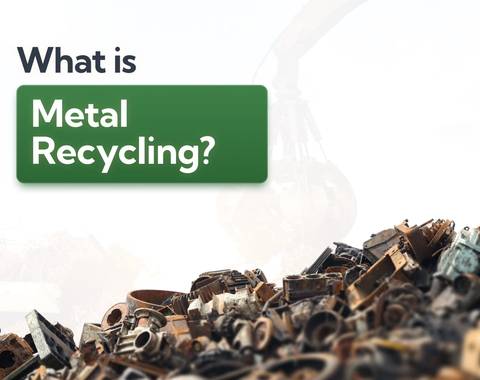
What is Metal Recycling?
Metal recycling turns scrap into reusable raw material. It's one of the most energy-efficient and economically viable forms of recycling there is, and it’s widespread across the UK. You'll find everything you need to know about metal recycling in this guide.
Last updated: 7th April, 2026

Anthony Sharkey is COO at New Reg Limited (Car.co.uk, Trader.co.uk, Garage.co.uk), driving innovation in vehicle recycling, logistics, and customer experience.
Listen to this story
Metal recycling is the process of collecting scrap metal and reprocessing it into raw material that can be used to manufacture new products. Rather than extracting virgin ore from the ground, manufacturers use recycled metal to produce everything from car parts to building materials.
It matters for a pretty simple reason: mining is expensive, energy-intensive and destructive to ecosystems. Recycling aluminium, for example, uses around 95% less energy than producing it from bauxite ore.
Economically, the UK's metal recycling industry contributes billions to the economy each year and supports tens of thousands of jobs. And since scrap metal also has real commodity value, there's a functioning market incentive that makes recycling self-sustaining.
Within the broader waste management picture, metal recycling sits at the top of the waste hierarchy. Reduce, reuse, recycle – metals loop through that cycle almost indefinitely without significant loss of quality, which makes them one of the most recoverable materials in existence.
That's why metal recycling is central to circular economy policy across the UK and Europe.
What's in this article
How does the metal recycling process work?
Scrap metal goes through several distinct stages before it becomes usable raw material again: collection, sorting, processing, melting, purification and solidification. Each stage uses specialised equipment to strip out contaminants and reshape the metal into a form manufacturers are able to work with.
The steps in the metal recycling process are as follows:
- Collection of scrap metal: Scrap metal comes from a wide range of sources, including end-of-life vehicles, demolished buildings, manufacturing offcuts, old appliances and consumer electronics. Construction, engineering and automotive businesses tend to generate the largest volumes, but individuals contribute too, either by dropping materials at local scrap yards or using council-run recycling centres. Some collectors also offer kerbside or site collection for larger loads, so it’s fairly easy to feed metal back into the supply chain whether you’re recycling as an individual or in bulk as a business.
- Sorting by metal type: Once collected, scrap metal is sorted into ferrous metals (iron and steel) and non-ferrous metals (aluminium, copper, brass and so on). Ferrous metals are pulled out using electromagnets, while non-ferrous materials go through eddy current separators or sensor-based systems like X-ray fluorescence scanning to identify specific alloys. Getting this right is crucial because mixed metals contaminate the batch and degrade the quality of whatever gets produced downstream.
- Shredding and size reduction: Scrap metal has to be shredded into smaller fragments before melting, so that more of the material is directly exposed to heat in the furnace. Industrial shredders and hammer mills break down bulky items like car bodies, white goods and structural steel into fist-sized chunks in a matter of seconds. Smaller pieces heat up faster and more evenly in the furnace, which reduces energy consumption and processing time at the next stage. Without this step, melting, say, a solid car door, would take several minutes vs a few seconds.
- Melting in industrial furnaces: Someone loads the shredded metal into large industrial furnaces (electric arc furnaces for steel, reverberatory or rotary furnaces for non-ferrous metals) and heats it to temperatures ranging from around 660°C for aluminium up to 1,500°C+ for steel. The metal liquefies completely, which allows impurities to separate out and rise to the surface as slag, which is then skimmed off. It's the most energy-intensive stage of the process, though still significantly cheaper than smelting virgin ore from scratch.
- Purification to remove contaminants: Purification strips out any contaminants that made it through earlier stages. Fluxing agents bind to impurities and pull them to the surface as slag, which operators skim off before moving on. Electrolysis handles what flux can't by running a current through the molten metal to separate out stubborn chemical impurities. The aim at this stage is to get recycled metal to the same quality spec as virgin material.
- Solidification into new forms: Once purified, the molten metal gets poured into moulds and cooled into either ingots, billets, sheets or coils, depending on what the end manufacturer needs. Ingots, which are essentially just uniform blocks that are easy to transport and store, are the most common output at this stage. From there, they typically go through rolling or extrusion at a separate facility to reach their final dimensions before entering the manufacturing supply chain.
- Distribution to manufacturers: The finished material gets sold on to manufacturers across automotive, construction, aerospace, packaging and electronics. At this point, the recycled metal is a functional raw material. This is what closes the recycling loop: scrap that was heading for landfill re-enters the supply chain as a commodity with real market value. Steel from scrapped cars ends up in new vehicles. Recycled aluminium goes into drinks cans that will themselves be recycled again. The cycle is genuinely circular when the infrastructure works properly.
What types of metals can be recycled?
The main categories of recyclable metals are ferrous metals, non-ferrous metals and precious metals, each of which can be recycled indefinitely without losing their core properties. However, each gets handled differently in the recycling process and valued for different reasons.
Ferrous metals
Ferrous metals contain iron as their base element. This makes them magnetic, which is why they’re easy to separate using an electromagnet. Steel dominates this category by volume, but cast iron, wrought iron and stainless steel all feed into the ferrous recycling stream too.
The four main ferrous metals you might recycle are:
- Steel: This is the most recycled material on the planet. It's used in everything from vehicles and appliances to structural beams and packaging, and it can be melted down and reformed repeatedly without meaningful degradation. According to UK Steel, the UK recycles around 10 million tonnes of steel annually.
- Cast iron: You’ll find this in older pipes, engine blocks, cookware and industrial machinery. It's recyclable but brittle, which means it fractures rather than bends under stress. So, recyclers need to account for that during shredding and handling to avoid equipment damage and material loss.
- Wrought iron: Scrap operators mainly recover this from older structures like Victorian-era railings, gates and ornamental metalwork. It's relatively pure iron with very low carbon content, which makes recycling easy.
- Stainless steel: Compared to the three above, this commands a higher price in the scrap market because of its chromium and nickel content, both of which have independent value. Plus, its corrosion resistance means it retains its quality well through multiple cycles.
Non-ferrous metals
Non-ferrous metals don't contain iron, which means they're non-magnetic and generally more resistant to corrosion. They also tend to be worth more per tonne than ferrous scrap; copper and aluminium in particular have significant commodity value that makes them worth recovering carefully.
There are seven common non-ferrous metals:
- Aluminium: This is one of the easiest metals to recycle, as well as one of the most valuable to do so. Recycling it uses ~95% less energy than producing it from raw bauxite ore, so the economics work exceptionally well.
- Copper: Copper is the most valuable metal in the scrap market. It's used heavily in electrical wiring, plumbing and electronics, and recycled copper performs nearly identically to virgin copper in most applications.
- Brass: An alloy of copper and zinc, brass is commonly found in plumbing fittings, valves, locks and decorative hardware. Recyclers melt it down and either re-alloy it into new brass or separate the copper and zinc components depending on what's in deman
- Bronze: Bronze is an alloy of copper and tin, and it shows up in architectural features, statues, marine components and industrial bearings. It's fully recyclable and retains its alloy properties well through the melting process.
- Lead: Lead is recycled at a higher rate than almost any other material globally, driven almost entirely by lead-acid batteries. Around 85% of all lead produced goes into batteries, and the recycling infrastructure for recovering it is mature and efficient. It’s important to keep lead out of landfill as well, as it's toxic and persistent in soil and water.
- Zinc: You’ll most commonly find zinc as a coating on galvanised steel, which complicates recovery slightly since it has to be separated from the steel substrate. It's also found in die-cast components and alloys. Recycled zinc feeds back into galvanising and brass production, which reduces the need to mine new zinc ore.
- Tin: Tin appears mainly as a thin coating on steel in food and beverage cans rather than as a bulk material. Recovering it requires detinning, which is a chemical process that strips the tin layer off the steel base so both materials can be recycled separately. Pure tin applications are relatively niche, but the coating recovery process is well established.
Precious metals
Precious metals represent a tiny fraction of total recycling volume but a highly disproportionate share of its value. Recovery rates are high because the economics demand it; even small quantities are worth the effort to extract properly.
Precious metals you’ll find in scrap metal include:
- Gold: You’ll find gold in electronics (circuit boards, connectors, semiconductors) as well as jewellery and dental materials. Recovery from electronics involves shredding and chemical leaching processes to dissolve and isolate the gold from other materials. Given the price per gram, even low-concentration sources are worth processing.
- Silver: Silver has the highest conductivity of all metals, so it gets used extensively in solar panels, medical equipment and electronics. Recycled silver re-enters both industrial and jewellery supply chains, and demand is strong so recovery infrastructure is well developed globally.
- Platinum: This metal is primarily recovered from catalytic converters, where it acts as a catalyst to reduce exhaust emissions. Old converters are crushed and the platinum group metals extracted through a combination of smelting and chemical refining. It's a technically involved process but the value makes it commercially viable at scale.
- Palladium: This sits alongside platinum in catalytic converters and has actually overtaken platinum in market price in recent years, driven by surging demand from petrol engine emission controls. Recovery follows the same process as platinum, and the two metals are often extracted together and separated downstream.
Which metals cannot be recycled?
Most metals can be recycled, but certain conditions make specific items unsafe or impractical to process through standard recycling streams:
- Contaminated or radioactive metals: These can't enter normal recycling infrastructure at all. Radioactive metal from medical, military or nuclear industries requires specialist handling under strict regulatory controls and is disposed of through separate licensed facilities rather than conventional scrap channels. The risk of contaminating an entire batch, and the equipment and workers processing it, makes standard recycling completely off the table.
- Metal mixed with hazardous materials: Machinery soaked in industrial chemicals, oil-saturated components or metal bonded to toxic substances needs careful separation before recycling can happen. In a lot of cases, a professional has to remove and dispose of the hazardous material first, which adds cost and complexity. Some mixed items are simply too contaminated to recover economically.
- Painted or coated metals: Paints and coatings don’t always render something unrecyclable, but burning off lead-based paint or other toxic finishes releases hazardous fumes and contaminates the melt. Because of that, stripping or treating the coating before processing is an absolute requirement. If that's not feasible, most recyclers will reject the item.
- Pressurised containers and aerosol cans: You can’t recycle these because it’s a safety issue (put a pressurised container through a shredder and it can explode). Most aerosol cans can be recycled once they’re completely empty and depressurised, but anything with residual pressure or contents needs to be taken care of separately. Many household recycling facilities won't accept them.
What are the benefits of metal recycling?
Metal recycling conserves natural resources, cuts energy consumption, reduces landfill waste and supports a commercially viable industry that employs tens of thousands of people in the UK. The environmental and economic case for it is about as solid as it gets.
Its most compelling benefits are:
- Reduces greenhouse gas emissions and air pollution: Mining and smelting virgin metal is carbon-heavy work. For instnace, recycling steel produces around 58% less carbon dioxide than making it from iron ore. At the scale the UK operates (millions of tonnes of metal recycled annually) those reductions make a huge dent in industrial emissions.
Conserves natural resources and prevents mining: Every tonne of recycled steel displaces roughly 1.4 tonnes of iron ore and 740kg of coal that would otherwise need to be mined. Copper and aluminium tell a similar story. Ore deposits aren't infinite, and the open-pit mining, blasting, heavy machinery and toxic tailings involved in the extraction process do serious environmental damage to the land around it. - Uses up to 95% less energy than producing new metal: The energy savings from recycling vary by the metal type, but are most dramatic with aluminium. Smelting aluminium from bauxite ore is enormously energy-intensive; recycling it requires about 5% of that energy. Steel recycling uses nearly 60% less energy compared to primary production, and copper sits somewhere in between. Across the metal recycling industry those savings add up to a massive reduction in grid demand and fossil fuel consumption.
- Lowers manufacturing costs: Recycled metal is cheaper to source because you're cutting out the mining, refining and primary smelting stages. For industries like automotive, construction and packaging which consume tonnes and tonnes of metal, that difference is material. And steel manufacturers using electric arc furnaces running on scrap can produce steel at significantly lower cost than integrated mills running on iron ore, which is why scrap-based production has grown steadily as a share of global steel output.
- Creates jobs in the recycling industry: The UK metal recycling sector supports tens of thousands of jobs across collection, sorting, processing, logistics and trading. And since scrap yards, processing facilities and distribution operations are rooted in specific communities and regions, they’re a genuinely local source of employment that's tied to physical infrastructure rather than offshore labour.
- Decreases landfill waste: Metal is one of the worst things to wind up in landfill because it doesn't break down and takes up significant space. Plus, it leaches contaminants into surrounding soil and groundwater over time. Recycling diverts it entirely from that stream. In the UK, metal packaging hit an 80.4% recycling rate in 2024, and steel was among the most recycled materials in the country. Far less landfill space has to be dedicated to metal, which means more can be dedicated to biodegradable items.
What the experts say

Steven Jackson OBE

What are the common challenges in metal recycling?
Contamination, sorting complexity, price volatility and hazardous materials are the main challenges when it comes to metal recycling. What happens when any of these go wrong is the whole process slows down and costs go up. Then, output quality suffers.
Let’s take a closer look at the most common issues metal recyclers face:
- Contamination from non-metal materials: Metal arriving at recycling facilities is almost never clean. It comes mixed with plastic, glass, rubber and/or wood, all of which have to be removed before processing can start. Contaminated batches slow down operations and can damage equipment if material gets through to the shredder or furnace. The more complex the source – say, a scrapped appliance versus an industrial offcut – the worse the contamination problem tends to be.
- Mixed metal sorting difficulties: Most products aren’t made from a single metal. A car alone contains steel, aluminium, copper, lead and various alloys, all of which have to be separated before recycling. Automated sorting handles a lot of this, but it's imperfect; misidentified alloys contaminate melts and degrade the quality of the output. The more complex the product, the more sorting steps required and the higher the risk of cross-contamination.
- Fluctuating scrap metal prices: Scrap metal is a commodity, so its price moves with global demand and energy costs. When prices drop, the economics of collecting and processing lower-grade scrap don’t make as much sense. Recycling facilities running on thin margins can find themselves sitting on stockpiles they can't sell profitably, while scrap dealers struggle to offer consistent prices to suppliers.
- Processing hazardous or coated metals: Metals with toxic coatings, paints, chemical residues or radioactive contamination can't go through standard recycling infrastructure. They require specialist handling, additional PPE, separate processing equipment and licensed disposal for the hazardous byproducts. That adds significant cost and complexity, and many facilities simply won't accept them. Because of this, they sometimes end up in the wrong waste stream entirely.
Where can metal be recycled?
You can recycle metal through local scrap yards, recycling centres, specialist services or car breakers. The right channel depends on the volume, type and condition of the material you’re trying to recycle.
Here’s what each one entails:
- Local scrap yards and scrap metal dealers: This is the most straightforward option for most people. You turn up with your scrap metal, then they weigh and assess it. You’re paid mainly based on current market rates. Scrap yards accept everything from old pipes and wiring to industrial offcuts and end-of-life machinery, so both individuals and businesses use them regularly.
- Local recycling centres: Household waste recycling centres (HWRCs) run by local councils accept smaller quantities of metal from homes free of charge. Most take common metals like steel, aluminium and copper, though they're not set up for large volumes or specialist materials. It's the most accessible option for anyone clearing out a garage or disposing of old appliances.
- Specialist metal recycling services: These businesses handle materials that standard scrap yards aren't equipped for, like electronics with precious metals, industrial equipment with hazardous components and specific alloys that need careful processing. They tend to work with businesses rather than individuals and offer scheduled pickup services alongside processing.
- Car breakers and auto salvage yards: Breakers and salvage yards dismantle end-of-life vehicles systematically, first recovering usable parts and then processing the remaining metal for recycling. Steel, aluminium, copper wiring and catalytic converter metals are all extracted and fed back into the supply chain. At minimum, 95% of the total scrapped car gets recycled, reused or recovered. If you want to scrap your car, this is where you’ll go.

How much does metal recycling cost?
For most individuals, dropping off common metals at a scrap yard or HWRC costs nothing – in fact, you’ll get paid for it. Scrap prices vary significantly by metal type, though, as do market demand, global commodity prices and your location. If you’re a business entity generating large volumes, you’ll most likely be able to negotiate rates directly with processors.
The one scenario where costs come in is hazardous or specialist material. Handling fees sometimes apply when extra processing is required.
Either way, recycled metal is substantially cheaper to produce than virgin material across every major metal type. That’s why there’s a market for it, and why it’s possible for you to get paid for scrap metal. They know they’ll make their money back and then some.
What are the tips for effective metal recycling?
Recycling metal efficiently comes down to preparation and using the right channels for the right materials. A few straightforward habits make a real difference to the quality of what gets recovered and how smoothly it moves through the recycling process.
There are five things worth doing:
- Separate ferrous from non-ferrous metals using a magnet: A basic fridge magnet is enough to tell you whether something is ferrous or not. If it sticks, you know it contains at least some iron. If it doesn't, you've got aluminium, copper, brass or something similar. Sorting before you arrive at a scrap yard speeds up the process makes things easier.
- Remove plastic, rubber and glass attachments: Mixed materials contaminate the metal stream and create extra work for recyclers. Strip off rubber seals, plastic fittings and glass components before dropping metal off. It doesn't need to be perfect, but the cleaner the metal, the less likely it is to be rejected or downgraded.
- Drain all fluids from metal containers: Oil, fuel, chemicals and other liquids left in tanks, canisters or engine components create safety hazards and contamination issues at the processing stage. So, empty and rinse containers before recycling them. Most scrap dealers won't accept anything with residual fluid, and turning up with a leaking tank is a reliable way to get turned away at the gate.
- Remove paint and coatings when possible: Paint, surface coatings and rust all introduce contaminants into the melt if they're not dealt with beforehand. Stripping or sanding them down before recycling produces cleaner material that's easier to purify and results in higher-quality output.
- Check scrap yard acceptance criteria before delivery: Scrap yards and recycling centres vary in what they accept, how they want material prepared and whether they charge handling fees for certain items. A quick call or check of their website before you load up saves a wasted trip. This matters even more for unusual alloys, electronics, anything hazardous or large volumes where the logistics need coordinating in advance.
Frequently asked questions
Rusted metal is still recyclable because iron oxide (which is all rust is) gets stripped out during the melting and purification stages. So, moderate surface rust on steel or iron isn't a problem for most scrap yards. Heavy corrosion that's compromised the metal’s structural integrity may reduce its value, but it won't normally get rejected outright.
Stainless steel is worth recycling and commands a higher scrap price than regular steel because of its chromium and nickel content, both of which have high independent commodity values. It's also one of the more durable metals in the recycling stream. It retains its properties well through multiple cycles, which makes it useful to manufacturers as a secondary material.
After leaving the scrap yard, metal gets transported to a processing facility where it's shredded, sorted, melted, purified and cast into a standardised form (e.g. ingots). From there it goes to manufacturers who use it as raw material in exactly the same way they'd use virgin metal. The turnaround from scrap to usable material can be a matter of weeks.
The metal recycling process takes anywhere from a few days to several weeks depending on the facility, the metal type and current demand. Simple ferrous scrap can move through a steel mill relatively quickly. Precious metal recovery from electronics or catalytic converters involves more complex chemical processing and typically takes somewhere on the longer end.
About Car.co.uk

Share on
Latest news & blogs