Water Pump Failure: Symptoms, Causes, Fixes and Costs
A failing water pump can send engine temperatures soaring in minutes. Coolant stops circulating, warning lights appear, and overheating follows fast. The good news? It’s not a particularly expensive fix, so spotting the early signs and replacing the pump ASAP can save your engine and wallet from worse damage.
Last updated: 3rd December, 2025

Award-winning CEO driving growth and social impact across automotive, recycling, and technology-led enterprise platforms.
Listen to this story
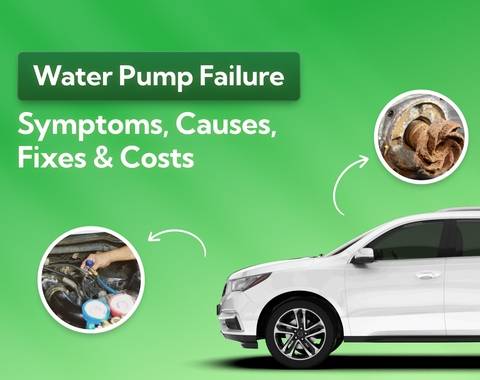
Water pump failure happens when the pump can no longer circulate coolant through the engine. The pump’s role in the cooling system is simple but non-negotiable: it keeps coolant moving, and without that flow, temperatures spike.
When it’s on its way out, you’ll usually notice overheating, coolant leaks, odd grinding noises and a warning light on your dash. All of these mean the engine isn’t being cooled properly, and every overheated mile increases the risk of catastrophic engine damage.
You can sometimes repair a water pump for around £150 to £300. But most of the time it’s better (and safer) to replace it outright. A full replacement can run up to £700, and you can’t ignore the issue because a failed pump can take the entire engine with it
Here’s what UK drivers need to know about spotting the signs early, why pumps fail, and how to deal with the problem before it turns catastrophic.
What's in this article
What is a water pump?
A car water pump is a mechanical device that keeps coolant moving through the engine, radiator, and heater core. It’s usually driven by the timing belt or auxiliary belt and works constantly while the engine is running.
Its job is straightforward:
- Pull coolant from the radiator.
- Push it through the engine block to absorb heat.
- Send it back to the radiator so that heat can be released.
Without that continuous circulation, hot spots form inside the engine. Once it overheats, the metal starts to expand unevenly as temperatures climb far beyond what the system was built to handle.
So if you don’t fix a broken water pump and you choose to keep driving with it, you’ll eventually reach the point where the excess heat cracks components and welds them together. Then, you’ll have a seized engine.
How does a water pump work?
The engine’s drive belt powers the water pump by spinning its pulley and turning the internal impeller. As the impeller rotates, it draws cooled coolant from the radiator, pushes it through the engine block to absorb heat and then sends the now-hot coolant back to the radiator to cool down again.
The thermostat regulates when coolant enters this cycle. It stays closed while the engine warms up, then opens in order to let coolant flow once the correct temperature is reached. This is how it keeps the engine’s temp within a safe operating range.
1. Engine powers the pump
The engine turns the auxiliary belt or timing belt, and that spinning motion drives the pump’s pulley. As long as the engine runs, the impeller inside the pump keeps rotating. There’s no separate motor or electronics doing the work.
2. Coolant enters the pump
With the impeller spinning, it creates a low-pressure zone that pulls coolant from the bottom of the radiator. The suction effect this creates is what starts the coolant’s journey back into the engine.
3. Coolant circulates through the engine
Once the coolant is inside the pump, the impeller blades force it into the engine block and around the cylinder head. As it moves through these channels, it absorbs the heat generated by the combustion and friction, thereby stopping the metal from overheating.
4. Coolant returns to the radiator
The now-hot coolant leaves the engine and flows into the radiator. Thin tubes and cooling fins release the heat into the air passing through the front grille, which brings the coolant back down to a safe temperature.
5. Continuous flow maintains engine temperature
This cycle repeats nonstop. The thermostat opens and closes as needed to control how much coolant circulates so that the engine stays at its ideal operating temperature: warm enough to run efficiently, cool enough to avoid damage.
What are the causes of water pump failure?
Water pumps fail when something interrupts the smooth movement of the impeller or damages the internal seals and bearings.
Wear and tear definitely plays a big role, but coolant contamination, incorrect coolant type, poor maintenance, overheating and issues with the drive belt can all push a pump over the edge faster than expected. Once the bearings start grinding or the seals begin leaking, coolant flow drops and total failure follows soon after.
On top of this, neglecting maintenance accelerates pump failure because worn belts, old coolant and unchecked leaks strain bearings and seals until they give out.
Here are the most common reasons a pump fails:
- Age and wear: The water pump is in continuous use while driving to circulate coolant, and that naturally wears it out over time. They generally last 60,000 to 90,000 miles (though there are plenty that last over 100,000). So vehicles that are 8 to 10+ years old are more likely to have water pump issues by default.
- Damaged water pump seals: The seals inside the pump keep coolant contained and protect the bearings from moisture. When they crack or harden, coolant starts leaking from the pump housing. Even a small leak lowers system pressure and reduces coolant flow, which pushes the pump to work harder and fail sooner.
- Worn-out bearings in the water pump: The bearings let the pump’s impeller spin smoothly. As they break down, the impeller becomes unstable, which causes wobbling, leakage and eventually complete pump seizure.
- Damaged impeller: The impeller is the part that actually moves the coolant, so any damage to it instantly reduces flow. Impellers can crack, corrode or even break apart if the coolant is old, improperly mixed or has lots of debris stuck in it. And some pumps use plastic impellers that are more vulnerable to heat and chemical breakdown over time. When the impeller blades wear away or weaken, the pump might still spin, but it certainly won’t circulate enough coolant to keep the engine at a safe temperature.
- Loose drive components: The water pump relies on the auxiliary belt or timing belt to spin at the correct speed. If the timing component becomes loose, worn, glazed or misaligned, the pump won’t turn properly. The reduced rotation this creates slows the coolant flow and makes the engine run hotter than it should. A slipping belt sometimes also puts uneven pressure on the pump shaft, which wears the bearings out faster and eventually leads to leaks and complete pump failure.
What are the symptoms of water pump failure?
The main signs your water pump’s on its way out are overheating, a grinding or whining noise coming out of the front, rust/mineral buildup on the pump, steam coming from the pump area and a damaged pump pulley.
If you’ve got one or more of the following issues, get the car looked at sooner rather than later. Because reduced coolant flow drags down your engine’s performance, increases the amount of fuel it burns and pushes the engine toward far more serious damage.
- Coolant leaking around the pump: You might spot a green, orange or pink fluid (depending on your coolant type) collecting on the driveway or see dried crusty residue around the pump housing itself. Coolant leaks happen when the internal seals start to break down and coolant escapes through the “weep hole”, which is a small opening designed to vent leaks when the pump is failing. If you notice coolant appearing only after the engine’s been running or you can smell something sweet under the bonnet, that’s a strong sign the pump is starting to fail.
- Engine overheating despite normal coolant levels: If your temperature gauge is climbing but the coolant level in the expansion tank is fine, the pump isn’t circulating coolant properly. The engine produces heat constantly, and without strong coolant flow, that heat just sits in the block and pushes temperatures into the danger zone. To narrow it down to the water pump, look for engine overheating that happens quickly after starting the car, fluctuates at random or gets worse at idle. If the radiator stays cool while the engine is hot or you can’t feel much heat moving through the hoses, those are classic signs the pump isn’t doing its job.
- Grinding or whining noise from the front of the engine: A high-pitched squeal usually points to worn pump bearings. When they can’t spin smoothly, the belt’s going to slip and the pulley’s going to wobble, causing the noise. A deeper grinding or growling noise tells you the impeller or internal bearings are breaking down, which is a sign the pump is close to seizing (more urgent). Whatever the tone, the key giveaway is that the noise rises and falls with engine speed. If revving the engine makes the sound louder or faster, the water pump (or its pulley) is very likely the culprit.
- Rust or mineral buildup on the pump: White, chalky deposits and orange rust around the pump housing are early warning signs that coolant has already been escaping in tiny amounts for a while. When coolant dries, it leaves behind mineral residue, and that crust builds up around seams, bolts and the weep hole. Corrosion is another issue because old and contaminated coolant becomes more acidic over time, then starts eating away at the pump’s metal surfaces. Both problems gradually weaken the seals, which in turn limits internal efficiency and restricts coolant flow. So if this is the problem, you’ll usually notice other symptoms like rising temperatures and poor heater performance as well.
- Steam or hot coolant leaking from the pump area: Steam means the system is under serious pressure. At this point, the pump’s seals have failed badly; otherwise, they wouldn’t allow hot coolant to escape and boil into steam. You might also hear a hissing sound, and you’ll almost definitely catch a sweet smell from inside the engine bay. When things reach this point, the pump can no longer maintain pressure or flow, and the engine can catastrophically overheat within minutes.
- Loose or damaged pump pulley: The pulley is what the belt actually grips, so if it’s bent or visibly damaged, the pump won’t spin smoothly. A wobbling pulley creates vibrations and causes the pump to rotate unevenly. Both of these issues create hotspots inside the engine because they make the coolant flow inconsistent. It also throws extra strain on the pump’s bearings and can shred the belt over time. Even a small amount of pulley play is enough to cause overheating or premature pump failure.
What the experts say

Steven Jackson OBE

How to fix a failing water pump
To fix a failing water pump, your first step is to inspect it for leaks. Then, check the pulley and belts for signs of damage.
Temporary “fixes” like topping up coolant or tightening a loose belt might buy you a little time, but they don’t stop the underlying wear; the only permanent solution is replacing the pump and any related components so coolant flow returns to full strength.
That’s why, if you notice anything, the only safe bet is to take it to a mechanic for a proper repair or replacement. This isn’t a job you want to handle on your own unless you’re already an experienced mechanic yourself.
1. Inspect the pump for leaks.
To inspect the pump, start by visually checking the water pump and its surrounding area for any signs of coolant loss. Early leaks show up as dried coolant residue or a small puddle forming under the front of the car after it’s been parked.
Even tiny leaks alter the system pressure and reduce coolant flow long before the pump fails, so it’s important you catch this early. Look closely around the pump housing, gasket area and the weep hole (a small vent built into the pump). Pay attention for fresh coolant, crusty residue and coolant-coloured staining.
2. Check the pulley and belts.
Next, look at the water pump pulley and the belt that drives it. With the engine off, try gently moving the pulley side-to-side. It should sit solidly in place when you do this. Any movement means the bearings are worn or the mounting is loose, both of which stop the pump from spinning smoothly like it should.
Then inspect the belt for cracking, fraying, glazing (a shiny, polished surface) or obvious slack. A damaged belt slips instead of gripping the pulley, which means the pump won’t circulate coolant at the speed the engine needs. If the pulley is visibly wobbling while the engine runs or if you hear a rhythmic squeaking or grinding from that area, you know the pulley itself is the problem.
3. Consult a mechanic.
If you notice anything unusual during those first two checks get the car to a professional. Water pump issues escalate quickly, and once overheating kicks in, you’re into blown head gasket and irreversible engine damage territory.
Here’s what to expect:
- A proper inspection and pressure test
- Belt and pulley assessment
- Clear diagnosis of repair vs. replacement options
- An upfront cost estimate
That’s your next step toward long-term engine protection.
4. Replace the water pump.
If the pump has failed (or it’s about to), you’ll need to replace it. Here’s the basic process to follow when doing so:
- Drain the coolant so the system is empty and safe to work on.
- Remove the drive belt or timing belt cover to access the pump.
- Unbolt and remove the old pump, taking care not to damage the gasket surface.
- Clean the mounting area so the new gasket seals properly.
- Fit the new water pump with a fresh gasket or sealant, depending on the design.
- Refit the belt and set the correct tension so the pump spins smoothly.
- Refill and bleed the coolant system to remove air pockets.
- Run the engine and check for leaks to confirm everything is sealed and flowing correctly.
Keep in mind, though, that this job involves tight spaces and precise timing. It also requires special tools like tools like torque wrenches, coolant catch trays, belt-tensioning tools, pulleys and pullers. If you don’t already own these things, the cost of buying them will be as much as, if not more than, the cost of parts + labour at a mechanic’s shop.
5. Temporary fixes.
In very specific situations (like a slow external weep from the pump housing), products like K-Seal can buy you a little time. But you have to remember they’re meant for getting you off the roadside or safely to a garage, not for keeping a failing pump alive. And even then, it only helps if the leak is tiny and the pump is still circulating coolant properly.
Also know that the limitations are big. Sealants can’t fix worn bearings, damaged impellers, failing seals or anything that goes wrong internally. They also don’t restore lost coolant pressure, which is the real danger with water pump failure. Rely on them for too long and you risk blocked coolant passages and engine overheating (and you know where things go from there).
What is the cost to fix a water pump?
In the UK, fixing a water pump usually costs between £250 and £450, although high-performance vehicles push the bill higher. And to be clear, “fixing” almost always means replacing the pump because once the bearings, seals or impeller have failed, there’s very little a mechanic can actually repair inside the unit.
Cost of repairing a water pump
To repair a water pump, the bill usually falls around £150 to £250. It’s cheaper than a full replacement, but not by a margin that genuinely saves you money. And in some cases, repairs actually end up more expensive than fitting a new or rebuilt pump once labour time stacks up.
Here’s how the cost typically breaks down:
- Labour (£100 to £200): Most of the cost is labour. The mechanic has to drain the coolant, remove the belt, strip the pump area, reseal it, refit everything and pressure-test the system. This is why repairs don’t always come out cheaper.
- Parts (£30 to £70): This includes the water pump gasket, O-rings and small housing seals. These are local sealing components (i.e. not a head gasket), and they’re inexpensive individually. But they don’t fix the internal wear that caused the pump to fail in the first place.
That’s the real problem: repairing a pump doesn’t replace worn bearings, damaged impellers and damaged seals. So even if the repair holds for a bit, reliability is weak and you often end up paying twice.
Cost of replacing a water pump
Replacing a water pump in the UK typically costs £250 to £450, with most cars landing somewhere in the middle of that range. This price includes the new pump, fresh coolant, gaskets or O-rings plus the labour needed to remove the old unit and refit everything correctly.
The final cost depends heavily on your vehicle, though.
- Cars where the pump is driven by the timing belt are more expensive because the mechanic has to remove additional covers and often replace the belt and tensioner at the same time.
- Pumps mounted on the auxiliary belt are quicker to access, which pushes the job towards the lower end of the range.
On top of that, premium brands, cramped engine bays and high-performance engines all add time and require different expertise so they’ll drive the bill up further.
DIY vs professional repair costs
Doing a water pump yourself can look cheaper at first glance, but the numbers tighten quickly. A DIY job might cost £60 to £120 in parts, plus whatever you need to spend on tools if you don’t have them.
A professional replacement, by comparison, sits at £250 to £450. But that price includes labour, proper bleeding of the cooling system and a guarantee the job’s been done correctly.
To tackle it at home, you’d need:
- A new water pump (£30 to £80)
- Coolant (£15 to £30)
- Gaskets/O-rings (£5 to £15)
- Tools like torque wrenches, belt-tensioning tools, sockets, coolant trays and possibly timing tools (£40 to £150+ if you don’t already own them)
If you already have the advanced skills and own all the tools, fixing the pump on your own saves you the mechanic’s labour cost.
But even then, you should know the risks of a DIY job are huge. If the pump sits behind the timing belt, one mistake could potentially put the engine’s timing out, which would destroy the valves and pistons. It’s better left to a professional who does these jobs every day.

Is it worth fixing your car with a failing water pump?
In most cases, fixing your car with a failing water pump is a worthwhile investment. That’s because a water pump replacement isn’t going to break the bank. You’re looking at a few hundred pounds, not the four-figure panic you get with things like a cracked engine block.
But this is where a bit of maths comes in. The pump might be affordable, but what else is your car going to need over the next year?
If the car is more than 10 years old or sitting on very high mileage, you’re probably staring at future jobs like suspension components, brakes, belts, sensors, or even a clutch. A £300 pump replacement makes less sense if you know another £800 of work is waiting around the corner.
On the other hand, if the car is in generally good condition, has plenty of life left, and hasn’t been bleeding money on repairs, fixing the pump is definitely worth it.
When to fix your car
Repairing the car is worth it if the water pump is the main issue and the rest of the vehicle is still in solid shape. Modern engines are built to last more than a decade when you properly maintain them, so spending a few hundred pounds here will buy you several more years of reliable use.
If your MOT history is clean, there are no warning lights piling up, and major components like the clutch, brakes and suspension are still healthy, replacing the pump is a sensible investment.
When to consider scrapping your car
Scrapping becomes the smarter move when the water pump is just one problem on a long list. If the car has creeping issues with the suspension, rust, electrical gremlins, oil leaks, worn timing components, or anything else that’s a much pricier fix, the water pump cost is just the start.
High-mileage engines (150k+), cars over 10 to 12 years old with repeated failures and vehicles worth less than £1,000 at current market value are prime candidates. At that point, it’s better to scrap your car, cut your losses and put the money towards one without issues.
Frequently asked questions
Realistically, you can’t drive with a failing water pump for more than a few minutes. Once the pump stops circulating coolant properly, temperatures rise quickly. After a couple of minutes of driving, the engine overheats and you’re risking potentially serious damage. It’s not worth pushing your luck.
It is not safe to drive with a failing water pump. Water pump failure means unreliable coolant flow, which means the car will overheat unpredictably. Extreme temperatures warp the cylinder head, blow the head gasket and might even seize the engine. If the pump is failing, park it and get it recovered.
A water pump failure can indirectly affect your car’s air conditioning because it relies on engine power and stable operating temperatures. If the engine overheats, the A/C may shut itself down to reduce load, or you may feel weaker cooling because the system is trying to protect the engine. But the pump doesn’t control the A/C directly.
A failing water pump can destroy a head gasket, warp the cylinder head, damage internal sensors and even crack the engine block if the overheating goes on for too long. It also puts extra strain on the drive belt and pulley system, which causes further mechanical issues.
About Car.co.uk

Share on
Latest news & blogs