Turbocharger Failure: Causes, Symptoms and Repair Solutions
Turbocharger failure is one of the most expensive and labour-intensive issues to fix, which is why preparation is so important. Learn what to expect if it happens to you.
Last updated: 6th January, 2026

Award-winning CEO driving growth and social impact across automotive, recycling, and technology-led enterprise platforms.
Listen to this story
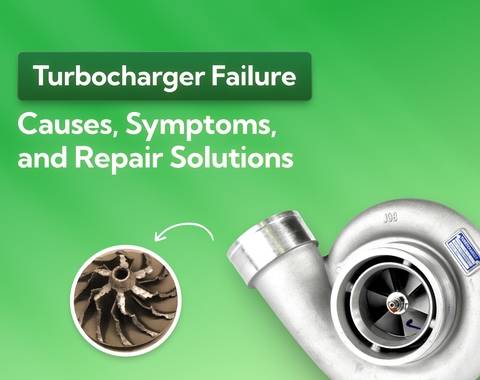
Turbocharger failure happens when the unit responsible for compressing air into the engine (which gives your car its extra power) stops working as it should. Because the turbo plays a key role in both performance and smooth engine operation, a failing one drags the whole system down with it.
Most failures come from worn bearings, oil starvation, contamination and exposure to high engine temps. Nearly all of them trace back to neglected maintenance. But regardless of what caused it, it’s important you address the problem quickly because if you don’t, it could irreversibly damage the whole engine.
In this guide, you’ll learn the turbocharger failure symptoms to watch for, how repairs are carried out and the steps you can take to avoid premature failure.
What's in this article
- 1. How does a turbocharger work?
- 2. What are the common causes of turbocharger failure?
- 3. What are the symptoms of turbocharger failure?
- 4. How to diagnose turbocharger failure
How does a turbocharger work?
A turbocharger is a compact device that boosts engine power and efficiency by forcing more air into the cylinders. It’s made up of a turbine, a compressor, a shaft connecting them and the housings and bearings that let it spin at astonishing speeds (over 200,000 RPM).
Here’s how a turbocharger works:
- Exhaust gases leave the engine and hit the turbine wheel.
- The turbine spins, driving the compressor on the opposite side of the housing.
- The compressor pulls in fresh air, compresses it and feeds it back into the engine.
- This “boosted” air charge allows the engine to burn more fuel with greater efficiency, producing more power without increasing engine size.
Turbochargers are part of most modern engines and are particularly important in small petrol and diesel ones that need strong performance without excessive emissions or fuel consumption. When you understand how the turbo works, you’ll find it much easier to spot early warning signs when the system starts to fail.
What are the common causes of turbocharger failure?
Turbocharger failure mainly stems from oil contamination, oil starvation and excessive heat, all of which slowly strip the turbo of the lubrication and cooling it depends on to function properly.
Dirty oil, blocked lines and engine overheating normally result from simple maintenance neglect, so staying on top of routine servicing is the easiest way to prevent them from snowballing into full turbo failure and, in the worst cases, catastrophic engine damage.
Here are the most common causes of turbo failure in modern engines:
- Oil contamination: Oil contamination happens when dirt, sludge and tiny metal particles make their way into the lubrication system through worn engine seals or a clogged air filter. These contaminants grind against the turbo’s moving parts, which creates friction that wears down the turbo’s bearings and shaft, damages the oil pump and generally degrades the rest of the engine. Using high-quality oil, changing it on schedule and replacing the oil filter when it’s due is the simplest way to keep contamination out and your turbo healthy.
- Oil starvation: Oil starvation (when the turbo doesn’t get enough oil to lubricate itself) results from low oil levels, a clogged oil filter or blockages in the oil passages feeding the unit. Without that steady oil flow, friction spikes and the turbo overheat and the metal-on-metal contact starts to destroy the internal bearings and seals. You’ll usually spot this issue by a noticeable drop in oil pressure. The good news is that it’s entirely preventable by keeping oil levels topped up, checking filters regularly, and making sure the engine’s oil passages stay clear.
- Excessive heat: Turbos already operate in a high-heat environment, but sustained temperatures above their normal range warp the bearings and seals until, eventually, they weld together and seize completely. High exhaust temperatures, weak cooling systems and engine overheating from heavy loads are usually what cause this. Keeping the cooling system healthy and watching your engine temperatures are key; regular maintenance, leak checks and routine system cleaning are how you keep heat from building up in the first place.
- Foreign object damage (FOD): FOD happens when debris enters the intake system and strikes the turbocharger’s internal components. The debris could come from countless places: a cracked or poorly fitted air filter, loose dirt, even tiny stones picked up from the road. When it reaches the turbine blades, it bends, chips and sometimes completely fractures them. And even the tiniest of particles might destroy the turbo because the high speeds it spins at amplify the impact. Keeping the air filters clean and making sure the intake system is free from debris are the best FOD prevention mechanisms.
- Worn or seized bearings: The bearings are what let the turbo’s shaft spin smoothly at extremely high speeds, so once they’re worn down or seized together the whole system will fail instantly. This is the most catastrophic scenario, and it happens because when there’s no oil to lubricate it, or the oil is contaminated, those bearings grind together. When they inevitably overheat, they weld together and stop the shaft from rotating freely. Using high-quality oil and keeping the lubrication system in good shape will prevent this, and regular maintenance checks will help you identify and address the root issue before things get this bad.
What are the symptoms of turbocharger failure?
Turbocharger failure shows up through a mix of performance loss, strange noises, smoke and warning lights on the dash. Spotting these early matters because they’re the first indicators that the turbo isn’t spinning properly or isn’t getting the air or oil it needs.
If you act quickly, you can stop a small issue from turning into catastrophic engine trouble, which is something that can happen in minutes if the car’s running at high temps. A professional diagnostic check is all it takes to confirm whether the turbo is the culprit.
Here are the key signs of turbocharger failure to watch for:
- Loss of power: Loss of power happens when the turbocharger can’t deliver the extra airflow the engine relies on for strong performance. You’ll feel it most during acceleration and when the car struggles to hold speed on hills and motorways. The drop in power is one of the more serious red flags for turbo failure, so it’s something you should address quickly if you want to prevent your engine from being destroyed.
- Excessive exhaust smoke: Excessive blue or black smoke coming from the exhaust means the turbo is leaking oil into the combustion chamber and burning it alongside fuel. When that happens, the engine consumes a lot more than it should, which starves the system faster and accelerates the underlying problem. This symptom needs immediate professional attention because in addition to turbo failure from oil starvation, driving with an oil leak can lead to catalytic converter failure and irreversible engine damage.
- Whining or grinding noise: A whining or grinding noise from under the bonnet points to damaged bearings or worn turbo seals that are struggling to keep the turbo spinning smoothly. The sounds will get louder during acceleration and whenever the turbo is under load, and that’s how you know the internal components aren’t rotating as they should. If the noise persists, it’s a clear warning that the turbo is on its way out, and getting it checked quickly is the only way to stop further damage.
- Engine misfire or rough idle: An engine misfire or rough idle happens when there’s an imbalance in the air-fuel mixture inside the engine, and a failing turbocharger is a common reason for that. When the turbo can’t deliver the right amount of air, the mix becomes either too rich or too lean. That causes the engine to stumble, shake and potentially misfire at low speeds or when idling. If you notice an engine misfire, long-term engine damage is around the corner, so pull over and get the system inspected straight away to confirm whether it’s the turbo at fault or something else.
- Check engine light: The engine management light (EML) is one of the most common signs that something in the vehicle isn’t working properly, and a failing turbocharger is often one of the culprits. When the turbo can’t manage airflow correctly, it disrupts the air-fuel ratio and alters exhaust emissions, both of which will trigger the warning. When the EML turns on, get a full diagnostic straight away to confirm the exact turbo-related fault codes behind the issue.
- Oil leaks: Oil leaks out when the turbo’s seals fail and let the lubricating oil escape from within. Once it leaks out, it’ll make its way into the exhaust system and the air intake, which hurts your performance and, as mentioned earlier, produces smoke and a strong burning-oil smell. It’s worth mentioning again that these leaks need quick attention because driving with a leaking turbo will escalate into serious engine damage, sometimes within a few minutes.
What the experts say

Steven Jackson OBE

How to diagnose turbocharger failure
A proper diagnosis of a turbocharger failure involves a visual inspection for leaks and damage, listening for abnormal noises and checking for excessive smoke from the exhaust. An OBD scanner also points you in the right direction by flagging boost-control faults and airflow issues linked to the turbo.
Diagnosing turbocharger failure is all about catching problems early because the sooner you identify the root cause, the easier it is to stop broader (and more serious) engine damage. And while you can spot the early signs yourself, a professional diagnosis is the safest way to confirm what’s actually wrong and keep repair costs from spiralling.
Here’s how you’d diagnose a failing turbocharger:
- Checking for oil leaks: Oil leaks come from damaged seals or gaskets, so they’re proof the turbocharger isn’t sealing or lubricating properly. You’ll want to inspect the oil inlet and outlet pipes, as well as the turbo housing itself, for any signs of seepage or wet spots. Left alone, leaking oil gets contaminated and the system gets starved of the oil it’s supposed to have, and both of those things will wreck the whole system. That’s why it’s so important to address them as soon as possible.
- Listening for whining noises: When the bearings are damaged inside the turbocharger and can’t spin freely, it creates a high-pitched whining noise. You’ll hear it most clearly when you accelerate, drive up a hill or tow something because those are the points with the greatest internal friction. If you notice it, get the turbo inspected straight away because it means there are likely multiple failing parts within the turbo that need immediate repair.
- Using OBD scanners for error codes: An OBD scanner plugs into your car’s ECU and pulls error codes linked to how well the turbocharger (and everything else) is performing. It flags boost-control faults, over boosting and airflow problems, and those codes make it much easier to identify the root cause. Even if you think you know what the issue is, an OBD scanner will give you confirmation of the exact turbo-related faults that need repair or deeper investigation.
- Performing a boost pressure test: A boost pressure test measures how much compressed air the turbo is actually delivering to the engine to give you a clear picture of its performance. The results show whether the turbo is producing the correct level of boost. Low readings point to problems with the boost control system, a faulty wastegate or leaks in the intake piping, which is what makes this such a crucial diagnostic step.
- Inspecting the turbocharger for play: Check for unwanted movement in the turbo’s shaft (e.g. wobbling). Too much means something is stopping the shaft from rotating smoothly – typically worn bearings or internal damage. That then leads to worsening performance in the near term and full turbo failure shortly after. When this is the issue, the simple fix is a bearing replacement, though if the damage has spread, a full turbo replacement would be the only safe option.
How to fix a failed turbocharger
Fixing a failed turbocharger comes down to three routes: repairing, rebuilding or replacing the whole unit. The right choice depends entirely on how severe the damage is.
If the damage is moderate, you can have a specialist diagnose the fault and then replace worn components or rebuild the turbo to restore its efficiency. Replacement is more expensive, but a requirement when the bearings, shaft or housings are damaged beyond repair. In any case, have a professional mechanic do the job if you care about long-term reliability.
Now, let’s dive into the available options to fix a failed turbocharger:
- Consult a professional mechanic: Consulting a professional mechanic is the smartest move when dealing with turbocharger problems, because the faults are extremely complex and require proper tools and expertise to diagnose. A professional will be able to pinpoint the issue, source genuine replacement parts and carry out the right repairs, while also addressing related engine problems you might have missed. And especially if the damage is significant or the cause is unclear, expert help is the only safe and reliable way forward.
- Consider turbocharger replacement: If the damage is too extensive, repairs or a full rebuild simply won’t be possible. Examples of ‘extensive’ damage include worn or broken turbine blades, shaft or housing. In these cases, replacement ends up more cost-effective than repeatedly repairing a failing unit anyway, because although the upfront cost is high, a new turbo essentially guarantees you won’t have to fix another component in the near future.
- Rebuild the turbocharger: In a turbocharger rebuild, the mechanic restores your existing turbo to proper working order by replacing the damaged components inside of it. It’s cheaper than a full replacement because most of the original housing and hardware are reusable. The process involves fitting new bearings, seals and sometimes a fresh compressor wheel to bring performance back to spec. It’s a solid option if the turbo is salvageable, but a poorly rebuilt turbo won’t last, so it needs to be done by a reputable specialist.
- Replace damaged seals and bearings: As mentioned earlier, because of their role in the turbo system, damaged seals and bearings sit at the heart of most turbo failures. When seals fail, oil leaks and air intake problems follow; when bearings wear out, temps climb as friction builds and the turbine suffers serious damage. Replacing them is the only way to restore the turbo’s function and stop damage from happening again, so expect to see it on your final bill.
- Check and repair the boost control system: The boost control system manages how much air pressure the turbo delivers so that the engine gets the right amount of boost without over- or under-pressurising it. When a boost pipe leaks, a sensor sends bad signals or a wastegate sticks open, the turbo can’t perform properly. Professional diagnostics are particularly important here because boost faults are more subtle and intermittent, so only specialist tools can accurately trace where the pressure loss or control failure is happening.
- Address oil system issues: The oil system lubricates the turbo, so problems like low pressure and clogged oil lines are extremely serious. When oil can’t reach the turbo in the right quantity, it dries the system out and the bearings and seals start to destroy themselves against each other. If the oil system is the root cause, fixing it by replacing a blocked filter, clearing oil lines and repairing leaks might be enough to restore the turbo’s ability to function properly. And sorting it early is vital if you want to prevent serious damage, particularly when low oil pressure is the issue.
How much does it cost to fix a failed turbocharger?
In the UK, fixing a failed turbocharger typically costs £195 to £1,400 for repairs or a rebuild and £1,000 to £2,500+ for a full replacement, though the final price depends on the extent of the damage and which option is actually viable.
These ranges reflect the differences between new turbo units, rebuild work and professional repairs. And all three repair options are affected by your vehicle model, labour rates in your area and how readily the parts are available.
Also worth mentioning: rebuilding might seem more cost-effective on paper, but a full replacement is usually the smarter long-term choice when the turbo is heavily damaged. The mechanic will tell you which option makes the most sense for your car when you consult them.
Cost of turbocharger replacement
Replacing a failed turbocharger costs anywhere from £550 to £ . It’s the most expensive route because you’re paying for a brand-new unit plus the labour required to install it, though the labour is more straightforward than on a rebuild.
Besides your car’s make/model, the reason for such variance is that labour rates vary dramatically based on where you live:
- Cheap areas: £50 to £70 per hour
- Typical nationwide average: £70 to £100 per hour
- Central London / South East: £120 to £140 per hour
And while full replacement is almost always a four-figure job, it’s the right call when the turbo is severely damaged or beyond rebuilding. And when you do, choose high-quality OEM parts to guarantee the new turbo’s reliability and long service life.

Cost of turbo rebuilding
Turbo rebuilding typically costs £195 to £1,400, depending on how much internal damage needs correcting. The process involves restoring your existing turbocharger by replacing worn components and recalibrating the unit, so most of what you’re paying for is labour.
It’s more cost-effective than full replacement because you’re reusing the housings and core structure, but the price rises as the technician spends more time replacing additional parts and carrying out precision balancing and testing.
Rebuilding is an excellent option when the turbo has minor to moderate wear because it restores performance without the high price of a new unit. But if the turbo is severely degraded with several cracked housings or destroyed turbine blades, the labour and parts bill creeps so high that a full replacement becomes more economical.
Factors affecting the cost
When it comes to fixing turbocharger failure, there are five cost drivers to be aware of:
- Vehicle make and model: Premium, performance, and diesel vehicles often use more complex turbos, which are pricier to repair or replace.
- Type of turbocharger: Variable-geometry turbos, twin-turbos, and hybrid units require more labour, specialised testing, and often more expensive parts.
- Labour rates in your area: Independent garages in cheaper regions may charge as little as £50/hr but London workshops routinely charge £120+.
- Parts availability: Some OEM turbos and internal components are harder to source than others, which would increase both parts and labour costs.
- Extent of damage: Minor wear means cheap repairs and severe internal damage means the exact opposite.
To get the best value and avoid poor-quality workmanship, it’s worth gathering multiple quotes from reputable mechanics who can explain the costs clearly and offer a quality guarantee.
Is it worth it to fix a failed turbocharger?
Deciding whether to repair, rebuild, or replace a failed turbo depends entirely on the damage and cost involved. Minor wear makes repairs possible, but severe damage requires a full turbo replacement. For older cars, scrapping is almost always cheaper.
To find the right answer for your situation, compare repair vs replacement costs, consider the car’s age and market value and get a mechanic’s estimate before choosing.
When turbo replacement is worth it
Turbo replacement is worth it when the turbo is so severely damaged that repairing or rebuilding it isn’t realistic. This includes situations where repair costs would exceed the price of a new turbo and when key components like the turbine blades or shaft are too far gone to salvage.
In those cases, only replacement is a reliable solution long-term. And again, OEM replacements are recommended here because they offer guaranteed fit and reliability.
When turbocharger repair makes sense
Turbocharger repair makes sense when the damage is minor and hasn’t compromised the turbo’s core components. It’s an ideal option when parts like bearings or seals are worn but still serviceable, so the mechanic can make targeted repairs without the cost of a full replacement.
Repairing individual components is the most cost-effective fix, so long as the repairs reliably restore the turbo to full function. But it’s still important to prioritise quality workmanship for long-term durability.
When scrapping the car is a better option
Scrapping the car is a better option when the turbo repair or replacement cost exceeds 50% of the vehicle’s actual value. This usually happens with cars older than 10 years or with 100,000+ miles on them and those with multiple other mechanical issues adding to the final cost.
If you meet the ‘50% Rule’ criteria, scrap your car to prevent yourself from sinking money into something that’s near the end of its usable life.
What are the preventive tips to avoid turbocharger failure?
Preventative maintenance is the easiest way to avoid turbocharger failure and keep the car functional for years. Regular oil changes, proper engine cooling and keeping the intake system clean are how you prevent overheating, oil contamination and wear. Staying consistent with maintenance is all it takes to avoid the expensive repairs and keep your turbo running efficiently.
Here are the best preventative maintenance tips for turbocharger failure:
- Regular oil changes: Regular oil changes are a big part of turbocharger health because the oil lubricates and cools the turbo’s fast-spinning components. When the oil gets old or contaminated, oil starvation creates internal friction and overheating. Sticking to the manufacturer’s service intervals and recommended oil type, and changing the oil filter every 3,000 to 7,500 miles will give the turbo a clean, consistent oil flow and prevent the turbo overheating and seizing.
- Proper engine cooling: You’ll want to keep the engine and turbo at safe operating temperatures so the components don’t overheat or warp. Proper coolant levels, a healthy radiator and working cooling fans all play a part in preventing the heat build-up that commonly destroys turbo seals and internal parts. Checking the cooling system monthly and topping it up when you need to is an easy way to avoid the overheating that will destroy your turbo.
- Boost control system maintenance: The boost control system manages the pressure the turbo delivers to the engine to make sure it stays within safe and efficient limits. Faulty wastegates, sticking valves and inaccurate boost sensors throw this balance off and hurt your engine’s performance. That poses a serious damage risk to the turbo. Routine checks when you take the car in for servicing, alongside prompt repairs, is enough to keep everything calibrated and working properly.
- Avoiding overboost situations: Overboost situations occur when the turbo produces more pressure than the engine can safely handle, putting huge strain on the turbo. Strain equals overheating, component damage and, yes, failure. Faulty boost control parts, inaccurate sensors and poorly executed tuning all cause this. Pay attention to your turbo’s boost levels and keep the system within safe limits to prevent it and protect the turbo and engine.
- Using quality fuel and oil: Using quality fuel and oil is crucial for turbocharger performance because poor fuel or low-grade oil can leave deposits, cause clogging and accelerate wear. Synthetic oils and high-quality fuel prevent contaminants from reaching the turbo’s delicate components. Checking fuel and oil quality when you fill up is an easy way to protect the system and avoid premature turbo failure.
- Regular air filter replacement: The air filter protects the turbo by blocking dirt and debris from entering the intake, and when it’s clogged, airflow drops and the turbo has to work much harder than it should. Replacing the filter every 15,000 to 30,000 miles keeps the air supply clean and reduces the risk of internal turbo damage. It’s a simple, low-cost step that goes a long way in extending the turbocharger’s lifespan.
- Avoiding excessive idling: Excessive idling keeps the turbocharger running under low load, which encourages carbon buildup and reduces its ability to lubricate the system effectively. Long idling periods also create thermal stress by letting the turbo heat up without enough airflow to cool it. To avoid this, switch off the engine during long waits.
Frequently asked questions
Driving with a blown turbo risks severe engine damage because the turbo can shed debris, leak oil, and cause the engine to run poorly or overheat. Continuing to drive also increases repair costs and may leave you stranded.
A turbocharger typically lasts 100,000 to 150,000 miles, but that lifespan varies based on maintenance, oil quality and driving conditions. Poor upkeep will shorten this to a few years or less.
You technically can drive with a faulty turbocharger, but you shouldn’t because reduced power, oil leaks, and overheating can escalate into major engine failure within minutes. It's safer to stop driving and call for a tow to get it inspected.
Yes, poor driving habits like aggressive acceleration, overloading the car and never letting the turbo cool down will contribute to a premature turbocharger failure. These behaviours increase heat and stress on internal components, which stresses the internals over time.
Turbocharger failure hurts fuel economy because the engine can't achieve efficient combustion without proper boost. The engine compensates by burning more fuel, which increases running costs.
About Car.co.uk

Share on
Latest news & blogs