Why is My Engine Management Light On?
The engine management light warns you something isn’t right under the bonnet, whether it’s as simple as a loose fuel cap or as serious as an engine misfire. In this guide, you’ll learn what each light colour means, common causes and what to do next to diagnose, fix and decide whether it’s worth it to repair your car.
Last updated: 3rd November, 2025

Award-winning automotive entrepreneur, tech innovator, and founder of Car.co.uk, NewReg.co.uk & Recycling Lives.
Listen to this story
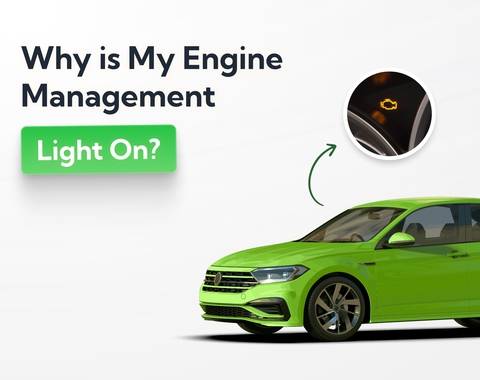
Your engine management light (EML) is your car’s way of saying something isn’t quite right under the bonnet. It comes on when the engine control unit (ECU) detects a fault, which could be anything from a minor sensor issue to a serious engine or emissions problem.
Most of the time, the EML shows as an amber/orange engine symbol, meaning there’s a fault that’s not urgent but still needs checking soon. A red light signals a serious issue that’ll damage the engine if you keep driving. And a flashing light is worst of all; it’s usually caused by misfires, which can ruin the catalytic converter.
In this guide, I’ll walk you through what the engine management light actually means, the most common reasons it turns on and what you can do to diagnose and fix the issue before it leads to expensive repairs.
What's in this article
- 1. What is the engine management light (EML)?
- 2. What causes the engine management light to come on?
- 3. Types of engine management light alerts
What is the engine management light (EML)?
The engine management light (EML) is a dashboard warning symbol that alerts you when your car’s engine control unit (ECU) detects a problem. It’s part of your vehicle’s onboard diagnostics system, and it’s designed to monitor key components that affect performance and emissions.
The ECU constantly gathers data from sensors across the engine. It measures things like:
- Air intake
- Oxygen levels
- Throttle position
- Emissions and air-fuel mixture
- Coolant and exhaust temperatures
- Crankshaft and camshaft speed
When something falls outside the normal range, the ECU triggers the EML to warn you there’s an issue that needs your attention.
Of course, the system helps you keep your car running smoothly, but that’s not the only thing it’s there for. It also protects your car’s legal roadworthiness. It helps you comply with UK emissions regulations by flagging faults that increase pollution and fuel consumption.
What causes the engine management light to come on?
The engine management light can come on for dozens of reasons, but it always means the ECU has detected something unusual. It might be a faulty sensor, a small fuel system glitch or a more serious mechanical fault. Some issues you can fix easily, but many need professional diagnostics.
Below are the most common causes I see and what they look like when they happen:
Faulty sensors
Modern cars rely on sensors to feed the ECU accurate data. If one fails, it’ll trigger the EML while reducing fuel efficiency and increasing emissions (even if the engine itself is fine). The main culprits are oxygen (O2) sensors, mass airflow (MAF) sensors and manifold absolute pressure (MAP) sensors.
Signs: Poor fuel economy, rough idling, sluggish acceleration and an inconsistent idle speed.
Ignition system problems
The ignition system is responsible for sparking the air-fuel mix in each cylinder. Faulty spark plugs, worn ignition coils, or damaged HT leads can cause misfires that the ECU picks up immediately.
Signs: Hesitation when accelerating, rough running or visible shaking at idle. You may also notice a flashing EML if the misfire is severe.
Exhaust system issues
Your car’s exhaust system, including the catalytic converter, oxygen sensors, EGR valve and DPF filter (for diesel engines) plays a major role in controlling emissions. Blockages, leaks and component failures here will set off the light and increase pollution levels.
Signs: Sulphur-like smells, rattling noises from under the car, smoke from the exhaust and reduced engine performance.
Fuel system problems
If fuel pressure or delivery isn’t right, the engine won’t run efficiently. This could be due to a clogged fuel filter, weak fuel pump or dirty injectors. The ECU detects the imbalance in fuel-air ratio and illuminates the EML.
Signs: Difficulty starting, stalling, uneven acceleration, weakening fuel economy and a noticeable loss of power under load.
Engine misfire and mechanical failures
Engine misfires and internal faults stemming from low compression, worn piston rings, timing issues or broken valves will quickly trigger the EML. A flashing EML points to a misfire severe enough to damage the catalytic converter; in that case, pull over ASAP and turn off the engine.
Signs: Shaking, knocking noises or the engine feeling rough and underpowered. In bad cases, it may struggle to start or cut out completely.
Electrical and ECU issues
Sometimes, the problem isn’t mechanical at all. Wiring faults, poor battery voltage, corroded connectors and ECU software glitches can all confuse the system and cause false alerts when there’s no real problem.
Signs: Random or intermittent warning lights, other electrical issues (like dimming headlights) or the EML staying on even after a reset.
Types of engine management light alerts
The colour and behaviour of your engine management light tell you how serious the problem is. Paying attention to this helps you decide whether it’s safe to keep driving or if you should stop immediately.
Amber/orange light (moderate issue)
This is the most common type of EML alert. An amber or orange engine management light means there’s a non-critical issue.
A few things can cause this:
- A loose fuel cap
- Minor emission control faults
- Early signs of problems with spark plugs or the ignition system
If you see an amber light, go ahead and continue your journey. But book a diagnostic check as soon as possible because those small issues will eventually turn into something detrimental to your engine’s performance that’s expensive to fix.
Red light (serious issue)
A red engine management light means there’s a critical problem that needs immediate attention. It’s often linked to low oil pressure, overheating or a major mechanical failure, all of which can cause severe engine damage if you ignore them.
Here’s exactly what to do:
- Pull over as soon as it’s safe to do so.
- Switch off the engine to prevent further damage.
- Check vital fluids like oil and coolant after the engine cools off (15 to 30 minutes).
- Call for roadside assistance or have the vehicle recovered to a garage.
Driving with a red EML will destroy your engine components — I’ve seen instances where it happens within minutes. Because of that, it’s absolutely critical you stop immediately and arrange professional repairs.
Flashing light (urgent attention needed)
A flashing engine management light means there’s an extremely serious problem that needs immediate action. It almost always happens because of a severe engine misfire or unburnt fuel entering the exhaust system, both of which will quickly damage the catalytic converter.
Because of that, here’s what you have to do:
- Pull over and stop driving as soon as it’s safe.
- Turn off the engine to prevent further damage.
- Call for roadside assistance or recovery (do not continue driving).
The immediate and severe nature of what a flashing EML entails means it always demands urgent professional attention. In most cases, you’ll also notice other symptoms like rough idling, loss of power, shaking or a strong smell of unburnt fuel from the exhaust alongside it.
On vs flashing light
The difference between an on and flashing engine management light comes down to urgency.
- If the light is on steadily and amber, the ECU has detected a fault but your car is still safe to drive for now. You should book a diagnostic check soon to prevent the fault from worsening.
- If the light is flashing, it’s a whole different story. One or more cylinders aren’t firing correctly and likely sending unburnt fuel into the exhaust. That fuel can overheat and destroy the catalytic converter. If you ignore it, you’ll still have to fix whatever’s causing the problem, but now you’ll also be buying a new catalytic converter.
The reason I say “on steadily and amber” is that not all cars are programmed to flash the EML when a misfire happens. Some systems only display different colours (amber for non-critical faults, red for severe ones). That’s why it’s important to pay attention to both the colour and behaviour of the light.
So…
- EML on steadily = non-critical if amber; critical if red
- EML flashing = critical, no matter what
What to do when the EML comes on
When your engine management light appears, you don’t necessarily have to panic, but don’t ignore it either. How you respond in the first few minutes will make the difference between a quick fix and a four-figure repair.
1. Observe the light’s colour.
Start by noting what colour the light is. Again:
- Amber or orange means there’s a non-critical fault, so it’s safe to drive short-term, but still book a check as soon as possible.
- Red or flashing means a serious issue that could damage the engine or catalytic converter. Stop driving immediately and call for assistance.
I’d also recommend looking at context clues, like
2. Turn off the engine.
If the light is red or flashing, turn off the engine as soon as it’s safe. Continuing to drive will overheat or seize the engine or destroy the catalytic converter, sometimes within minutes.
If the EML is red or flashing, pull over and turn off the engine as soon as it’s safe. This prevents further damage from happening to internal components.
Some issues, like overheating, can cause the engine’s metal components to warp and fuse together or blow the head gasket. Others like low oil pressure mean vital engine parts aren’t being lubricated properly.
In both cases, driving even a short distance will destroy the engine beyond repair.
3. Check the fuel cap.
A loose or damaged fuel cap is one of the simplest reasons your engine management light might come on. It compromises the seal and lets fuel vapours escape, which triggers an error code.
Here’s how to check it:
- Pull over safely and switch off the engine.
- Open the fuel flap and remove the cap.
- Inspect the seal for cracks, dirt and damage.
- Refit the cap by turning it clockwise until you hear it click several times.
- Restart the car and continue your journey.
If the loose cap was the cause, the EML should clear itself after a few drive cycles. If the light stays on, the issue lies elsewhere and you’ll need a diagnostic check
4. Note performance changes.
Pay attention to how the car feels when driving because it can give you more insight into why the EML is on in the first place.
- Loss of power or sluggish acceleration points to ignition, fuel delivery or turbocharger problems.
- Rough idling and vibrations indicate a misfire or faulty spark plug.
- Jerky gear changes or hesitation suggest sensor or transmission-related issues.
- Unusual noises like engine knocking, rattling or hissing hint at mechanical or exhaust leaks.
- Strong smells of unburnt fuel or sulphur mean there’s an emissions or catalytic converter fault.
Performance issues are linked to the EML because the ECU monitors how the engine runs through various sensors. When one system goes out of balance, the ECU detects the abnormal data and triggers the warning light to protect your engine and emissions system.
What the experts say

Anthony Sharkey

5. Visit a garage.
If the engine management light stays on after basic checks (or if the car starts feeling different to drive), it’s time to visit a qualified mechanic. A professional will be able to connect an OBD2 diagnostic scanner to your car’s ECU to read the fault codes.
Fault codes tell you exactly which system or component triggered the warning, whether it’s a faulty sensor, misfire or emissions issue. From there, the mechanic can inspect the affected parts, run further tests, and carry out the necessary repairs or resets.
Early intervention is key here. A simple diagnostic check now will save you from replacing a catalytic converter or rebuilding an engine later on.
Tips to fix engine management light issues
You can’t always prevent the engine management light from coming on, but regular care and attention go a long way toward keeping it off. When you stay on top of maintenance and spot problems early, you’ll save tonnes of money and reduce your chances of major engine damage.
Perform regular maintenance.
Routine servicing is the best way to stop EML problems before they start. Most warning lights come down to wear-and-tear parts like spark plugs, filters and sensors that degrade over time. Replacing them at the recommended intervals keeps your engine running smoothly and ensures the ECU receives accurate data.
On top of that, timely oil changes (every 5,000 to 7,500 miles) also help tremendously because they prevent sludge that can block sensors. Fuel system checks keep injectors clean and combustion efficient. And keeping the air filter clean helps the engine breathe properly to reduce emissions.
Check for simple issues first.
Not every EML means a major fault. Some of the most common triggers are quick to check and easy to fix yourself.
Start with the fuel cap. If it’s loose or damaged, tighten or replace it. Then, look at fluid levels. Low oil or engine coolant could indirectly cause the EML to turn on due to overheating under the bonnet.
If you’ve ruled out those issues, look for obvious leaks, loose wiring and disconnected sensors. A split vacuum hose, damaged connector or unplugged airflow sensor can all trigger the EML and are easy to spot and fix without tools.
Use an OBD scanner for diagnostics.
A mechanic will use one of these, but you can save some money now and in the future by doing it yourself. You’ll find basic scanners for under £100, but the more advanced models will cost £200 to £300+. You can buy affordable versions from retailers like Halfords and online shops specialising in automotive tools.
How to interpret the codes:
- Plug the scanner into the car’s OBD2/EOBD port (usually under the dashboard).
- Turn the ignition on (engine off) and let the scanner read fault codes.
- The scanner will display one or more codes (e.g., P0301, P0420).
- Look up the code in the manual or via the scanner’s software. For example: “P0301 = cylinder 1 misfire”, “P0420 = catalytic converter efficiency below threshold”.
After diagnosing the issue, you can clear the codes. If they return the next drive, the fault remains.
Address sensor and system failures.
When the EML is triggered by a sensor failure, start with a diagnostic scan to identify which one’s at fault. Like I mentioned earlier, common sources are oxygen sensors, MAF sensors and coolant temperature sensors. Once you’ve confirmed what it is, replacing the faulty component usually restores proper engine performance and clears the warning.
If your scan shows ignition coil or fuel injector faults, replacement is usually the best fix, especially if the car misfires or idles roughly. Worn coils and clogged injectors can cause long-term damage if ignored.
You should only replace a catalytic converter if it’s confirmed blocked or below the efficiency threshold (code P0420). Since it’s expensive, check for upstream causes first, like a misfire or bad sensor, before replacing it.
Seek professional help for complex issues.
Anything beyond a simple fix is best left to a qualified mechanic. Modern engines rely on advanced electronics, sensors and emissions systems that need specialised diagnostic tools to test properly.
A professional will be able to pinpoint the exact faults far more accurately than a basic code reader and handle complex repairs like ECU faults, wiring problems and internal engine damage.
And assuming you keep driving the car, delaying your visit to the garage will only make things worse. Early diagnosis keeps costs down and prevents long-term engine damage.


Is it worth it to repair or scrap my car with the EML on?
Of course, cost is a major concern when the engine management light pops on. Many of us don’t have a few thousand pounds sitting around for an expensive engine repair. So one of the first questions most drivers ask us is whether it’s worth repairing the issue in the first place, or if it’s time to move on and scrap the car.
The answer depends on the fault, the car’s age and the repair costs involved.
When fixing is worth it
Repairing your car is almost always worth it if the fault is minor and affordable to fix, such as a faulty sensor, coil pack or fuel injector. These are quick, low-cost repairs that’ll restore its performance and reliability without breaking the bank.
It’s also worth repairing if the vehicle still holds significant value after the fix. Get an instant car valuation using our free tool and compare that with the estimated repair cost. If the cost is less than half the vehicle’s current value, it’s normally worth doing.
Factors like age, mileage and overall condition also matter, though. A newer, well-maintained car with plenty of life left is a far better candidate for repair because fixing it will extend its usable life by years and save you the cost of buying another vehicle.
When scrapping is the better option
It’s better to scrap your car when repair costs exceed 50% of the car’s market value and you’re facing major mechanical faults like engine seizure or catalytic converter failure. Those kinds of repairs can run into four figures and don’t guarantee long-term reliability if your car’s older or has 100,000+ miles on it.
Also, if the car has recurring issues, corrosion or multiple dashboard warnings at once, it’s usually more cost-effective to scrap it.
Keep in mind, though, that scrapping still brings value. When you scrap through us, we offer free collection and instant bank transfer payment based on current metal and parts prices. You’re able to recover some money without further spending on repairs.
How to reset the engine management light (EML)
Once you’ve fixed the issue that caused the EML to appear, you’ll want to clear the warning light from your dashboard. There are a few ways to approach this, depending on the tools you have and the fault’s severity.
Resetting the EML using an OBD scanner
The safest and easiest way to reset the light is with an OBD2 scanner. Plug it into your car’s diagnostic port, turn the ignition on (without starting the engine) and select the “Clear Codes” or “Erase Faults” option.
If the underlying problem has been fixed, the EML will disappear. If the light returns after a few drives, the fault is still present and needs further investigation.
Manual reset methods
Most modern cars allow a manual reset by disconnecting the battery for around 15 to 30 minutes, then reconnecting the negative terminal. This forces the ECU to reset.
Keep in mind that while it can clear the light temporarily, it also wipes your radio presets and other stored settings. Also remember that it doesn’t fix the actual fault. If you haven’t addressed the root issue, the EML will come back once the ECU detects the same problem again.
Professional diagnostic reset
If you don’t have access to a scanner or the light won’t clear, visit a garage or auto electrician. Professionals use advanced diagnostic tools to confirm that the fault has been properly resolved before resetting the system.
The added benefit to this method is that it verifies there are no hidden issues left behind and that your car still complies with emissions standards (something that’s important for MOT testing).
Frequently asked questions
Yes. A loose or damaged fuel cap is one of the most common (but mostly harmless) reasons for the EML to appear after filling up. A loose cap causes pressure changes in the fuel system that trigger an emissions warning. Tighten the cap until it clicks and drive as normal. Then, the light should turn off after a few trips if that was the cause.
Ignoring the EML will turn a small, affordable fix into a major repair. What starts as a simple sensor fault or mild misfire can lead to catalytic converter damage, poor fuel economy or full engine failure over time. The longer the light stays on, the more risk (and cost) you take on.
Absolutely. Many EML warnings come from minor faults like a failing oxygen sensor or dirty air filter. While the car may still drive normally, these issues affect emissions and fuel efficiency, so it’s still best to have them looked at before they cause bigger problems.
Extreme weather sure can play a role. Cold, damp conditions might trigger false readings from sensors or cause moisture to interfere with electrical connectors. Hot weather can stress the cooling system and lead to overheating warnings. If an amber EML comes on after a big temperature change, it’s worth monitoring to see if it clears once conditions stabilise.
About Car.co.uk

Share on
Latest news & blogs