EGR Valve Failure: Causes, Symptoms and Diagnosis
EGR valve failure increases your car’s emissions, hurts the engine’s performance and will cause costly engine damage if you ignore it. Learn how to spot the early symptoms, understand what causes the valve to fail and choose the right fix, whether that’s cleaning, repair, or full replacement.
Last updated: 6th January, 2026

Anthony Sharkey is COO at New Reg Limited (Car.co.uk, Trader.co.uk, Garage.co.uk), driving innovation in vehicle recycling, logistics, and customer experience.
Listen to this story
The EGR valve helps lower NOx and keeps the engine running efficiently by recirculating exhaust gases back into the intake. When it clogs with carbon, suffers an electrical or sensor fault, develops a vacuum-line leak or overheats, the valve can’t open or close correctly.
That’s when you feel the symptoms: rough running, stalling, higher fuel use, misfires and a glowing engine management light. Most garages confirm the issue with an OBD-II diagnostics scan and a physical inspection of the valve and related hoses.
In today’s guide, you’ll learn everything you need to know about EGR valve failure and how to approach it.
What's in this article
- 1. What is an EGR valve?
- 2. What are the causes of EGR valve failure?
- 3. What are the symptoms of EGR valve failure?
- 4. How to diagnose EGR valve failure?
What is an EGR valve?
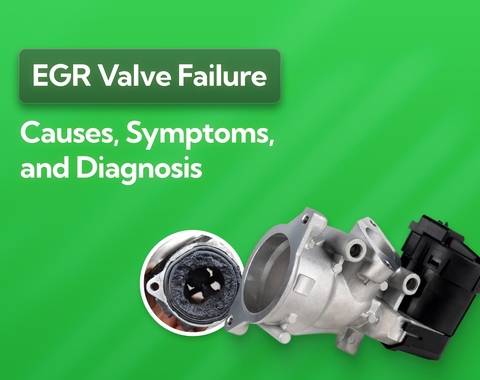
An EGR (exhaust gas recirculation) valve is a key part of a car’s emission control system, designed to reduce nitrogen oxide (NOx) emissions by recirculating a controlled amount of exhaust gas back into the combustion chamber. This lowers combustion temperatures and helps the engine burn cleaner.
It plays an important role in emission control and meeting environmental regulations, but it also supports smoother running by reducing knock and improving overall efficiency.
The valve sits between the exhaust and intake systems, opening and closing as needed to manage gas flow. By doing so, it helps the vehicle meet UK emissions standards and can even support better fuel economy.
What are the causes of EGR valve failure?
EGR valve failure usually comes down to a handful of common issues: carbon buildup (the big one), electrical faults, vacuum-line leaks, sensor errors and prolonged exposure to high engine temps.
Those problems come from different places. Some are environmental, others are mechanical or electronic, but they all interfere with the valve’s ability to manage exhaust flow.
Understanding what caused the failure helps you fix it properly and avoid further engine problems or worsening performance later on.
Here’s a closer look at what exactly causes EGR valve failure:
- Carbon buildup: This is the most common cause of EGR valve failure because exhaust gases naturally cool as they pass through the system, leaving behind soot that collects inside the valve. Over time, that soot hardens and clogs the passage. Once the valve is restricted, it can’t control exhaust flow properly. That’s when you start seeing rough idling, hesitation, higher fuel use and a general drop in performance because the engine isn’t getting the clean, balanced mix it needs. Regular cleaning and basic maintenance go a long way here. Keeping the system clear of soot helps the EGR valve open and close freely and stay reliable for much longer.
- Electrical failure: This is particularly common on modern cars where the valve relies on sensors and wiring to open and close at the right time. If a connector loosens or a position sensor fails, the system can’t communicate properly. When that happens, the valve receives the wrong commands and sends inaccurate readings back to the ECU. The result is a malfunctioning valve that weakens engine performance and causes misfires. Keeping the wiring, connectors and sensors in good condition is crucial if you want to avoid these kinds of failures.
- Sensor malfunction: Since the system relies on accurate data to decide when and how far the valve should open, sensor malfunctions are another major cause of EGR valve failure. These sensors monitor exhaust flow, valve positioning and the overall conditions inside the engine. If a sensor starts sending incorrect data to the ECU, the EGR valve may open at the wrong time, stay closed when it shouldn’t or cycle erratically. That confusion quickly translates into rough running, higher emissions, and poor driveability. Regular sensor checks and basic maintenance help you catch these faults early and keep the EGR system working as intended.
- Vacuum leaks: Hoses, gaskets and seals are all needed to create the vacuum that moves the valve. When those parts crack, harden or loosen, air sneaks in and disrupts that pressure. Once the vacuum is unstable, the EGR valve can’t open or close consistently. That leads to erratic exhaust recirculation, rough idling, hesitation when you drive and, in worse cases, engine misfires because the combustion mix is constantly being thrown off. Regularly checking the vacuum lines and seals help catch these leaks early and stop small faults from turning into bigger engine problems.
- Engine heat: The EGR valve sits in a harsh part of the engine bay, so it’s constantly exposed to hot exhaust gases. Over time, that heat weakens the metal, dries out the seals and damages the internal components. When temperatures climb too high, parts of the EGR valve warp and eventually seize. That restricts exhaust flow and could potentially stop the valve from operating altogether, leaving you with rough running, higher emissions and warning lights on your dash. Keeping the cooling system healthy and paying attention to rising engine temperatures helps protect the EGR valve from heat-related damage.
- Poor-quality fuel: Contaminated or low-grade fuel burns less cleanly and creates more soot. That extra buildup travels straight through the exhaust system and ends up coating the EGR valve. As those carbon deposits and impurities build up, they clog the valve’s passages and reduce its ability to regulate exhaust gas flow. The engine then runs less efficiently and becomes more prone to hesitation and smoking. Sticking to good-quality fuel and keeping the fuel system well-maintained minimises the odds of this happening and will protect the EGR valve from unnecessary wear.
What the experts say

Steven Jackson OBE

What are the symptoms of EGR valve failure?
Symptoms of EGR valve failure include rough idle, poor performance, increased fuel consumption, engine stalling and the engine management light activating.
It usually makes itself known through a combination of these not-so-subtle symptoms because the engine relies on controlled exhaust recirculation to run smoothly. When the valve sticks or clogs, that balance is lost and performance quickly suffers.
Spotting the signs early is critical. Ignoring them will create bigger problems like increased engine wear, which leads to higher repair costs. If something feels wrong, get the car diagnosed and fixed as soon as possible to protect the engine and restore proper performance.
Here are the telltale signs of EGR valve failure:
- Rough idle: This is one of the clearest signs of EGR valve failure because the wrong amount of exhaust gas entering the intake upsets the engine’s balance. When the valve sticks open or closed, the airflow becomes irregular and the engine struggles to maintain a steady idle. You’ll feel this as vibrations through the cabin and a wavering idle speed. The car will feel uneasy even though you’re not moving. Make sure you don’t ignore this – a persistent rough idle now means bigger engine problems shortly after, so it’s worth getting checked and fixed as soon as you can.
- Poor engine performance: Weaker performance is a common consequence of a failing EGR valve because the engine depends on the right amount of recirculated exhaust gases to maintain efficient combustion. When the valve can’t regulate that flow, the mixture becomes unbalanced and power drops. You’ll feel it as a noticeable lack of power when accelerating or or driving up a hill, and hesitation when you press down on the gas. The car just doesn’t respond the way it should. A proper diagnostic check and repair will bring the engine back to full strength and help prevent more serious long-term damage.
- Engine stalling: Incorrect exhaust flow ruins the fuel-air mixture that the engine relies on to keep itself running. If the valve sticks open or closed, the imbalance is sometimes enough to make the engine cut out altogether. Stalling shows up at idle, during slow manoeuvres and when you’re shifting between gears, which are the moments when the engine is most sensitive to changes in airflow. In busy stop-and-go traffic, it’ll be especially noticeable and frustrating. Because this snowballs into serious mechanical issues, it’s something you should check and resolve ASAP.
- Increased fuel consumption: When a faulty valve disrupts the fuel-air mixture, the engine isn’t getting the balance it expects and it burns more fuel to compensate. That inefficiency shows up as lower gas mileage and higher running costs – in particular, on longer drives and in stop-start conditions (where the EGR system works its hardest). It’s one of the first changes you’ll notice. Regular maintenance and timely EGR valve checks help restore proper combustion and keep fuel consumption under control.
- Check engine light: The engine management light (EML) comes on when the EGR system starts acting up because the ECU quickly spots irregular exhaust flow, stuck valves or failed supporting components. When the EML turns on, it’s the car’s way of saying something in the emissions system isn’t responding as expected. It might point to a direct EGR fault, a sensor problem or an issue elsewhere that’s affecting how the valve operates. A quick scan with an OBD-II tool usually reveals the specific error code and helps narrow down the cause. Don’t ignore this, though, because it could mean dozens of different (and potentially severe) issues with the engine. It’s an early warning that diagnostics and repairs are needed to prevent more serious engine damage.
- Engine misfires: When the balance of air and fuel flowing through the valve is wrong, one or more cylinders sometimes fail to ignite properly. That’s when an engine misfire shows up. You’ll feel the car run rougher than it’s supposed to, hesitate when it accelerates and cut out briefly as if it’s about to stall. This is one of the most serious issues you can have and it can quickly lead to catastrophic engine damage. The only way to prevent further engine damage and restore its normal operation is to stop driving and get the EGR valve diagnosed and repaired immediately.
How to diagnose EGR valve failure?
Diagnosing EGR valve failure starts with an OBD-II scan to pull fault codes, followed by vacuum tests, manual inspection of the valve and electrical testing of the wiring and sensors. Together, those steps reveal whether the valve is clogged, stuck, electrically faulty or being affected by another underlying issue.
If you’re seeing signs of EGR trouble, it’s worth having a professional carry out a full diagnostic. Doing this early stops the issues from progressing into serious and potentially irreversible engine damage.
Here are the steps to follow when diagnosing EGR valve failure:
- Using OBD-II scanning: An OBD-II scan is the first step in diagnosing EGR valve failure. A simple plug-in diagnostic tool can pull the error codes stored in the ECU within seconds. Those readings tell you a lot: whether the ECU has detected incorrect exhaust flow, a stuck valve, a sensor fault or an electrical issue in the EGR circuit. It narrows the problem down before you open everything up for a physical inspection. It’s quick, reliable and should always be the starting point when investigating EGR-related symptoms.
- Performing vacuum tests to detect leaks: The EGR valve relies on stable pressure to operate correctly, and the vacuum test checks whether the system can hold vacuum or if there’s a leak affecting exhaust gas flow. Doing this test will quickly reveal cracked hoses, hardened seals and failing gaskets that stop the EGR valve from opening and closing like it’s supposed to. It’s a simple way to confirm whether the issue is mechanical rather than electrical or sensor-related.
- Conducting manual inspection to identify EGR valve issues: A manual inspection gives you a close look at what the EGR valve is actually doing. It’s where a mechanic spots specific problems like carbon buildup, worn components, sticking mechanisms and obvious physical damage. During the inspection, the technician might clean the valve and its passages. If the issue is only minor, this is sometimes enough to bring the valve back to life. Manual inspection becomes especially valuable when other tests don’t paint a full picture. Seeing the valve up close often confirms the real cause of the fault.
- Electrical testing: Electrical testing is used to identify faults in the EGR system’s electrical components and wiring. This part of the diagnosis involves checking the wiring for breaks and corrosion, confirming sensors are sending accurate signals and making sure connectors haven’t loosened or failed. A bad connection will cause the valve to stick or respond at the wrong time. If you don’t do this as part of your diagnostic process, you won’t have any way of making sure the EGR system is getting the right commands.
- Performing a smoke test: A smoke test is a more advanced way to track down stubborn EGR system leaks. It’s useful when the engine is showing clear symptoms but the above checks haven’t pinpointed the fault. During the test, a specialist tool fills the system with low-pressure smoke. Anywhere the smoke escapes, you’ve found a leak. If the smoke backs up or doesn’t move as expected, that can also hint at a blockage in the EGR passages.
- Checking EGR valve functionality: Checking the EGR valve functionality means seeing how the valve responds to commands sent directly from the engine control unit (ECU). This shows whether the ECU can trigger the valve to open and close on demand.
Watching the valve’s reaction makes it clear if it’s moving freely and regulating exhaust flow properly. It’s usually done after other diagnostic tests to confirm whether the valve is working or needs to be replaced. Slow movement, partial movement or no movement at all points to a failing valve that can’t manage recirculation correctly.
How to fix EGR valve failure
Fixing EGR valve failure usually involves cleaning, replacing, or reprogramming components within the EGR system.
The right approach depends on how severe the issue is; light carbon buildup is something you can clean, but a damaged valve needs replacing. A mechanic’s help is best for complicated jobs like valve replacement because you’d risk damaging the engine trying it yourself.
Here are the recommended methods to fix EGR valve failure:
- Seek professional diagnosis: Professional diagnosis will identify the root cause of EGR valve failure. A qualified mechanic will use tools like OBD-II scanners to pull precise fault codes and assess the EGR system properly. Early diagnosis keeps you from making unnecessary repairs and part replacements, so it saves you lots of time and money.
- Consider professional cleaning: Professional cleaning is an effective fix when carbon buildup and soot are causing the EGR valve failure. Removing those deposits restores the valve’s normal exhaust flow and helps it respond properly again. Regular cleaning also reduces the chance of repeat issues by keeping the whole system working efficiently for longer.
Plan for replacement: Replacement becomes the only option when the EGR valve is too clogged or damaged for a cleaning to save it. Once you fit the new valve, it’ll restore proper exhaust recirculation and overall engine performance. A qualified professional should handle the replacement to ensure the correct part is installed and the system functions as intended. - Check for coolant leaks: Checking for coolant leaks is important because problems in the cooling system increase the engine’s temperature, and overheating affects how the EGR system performs. Engine coolant leaks that cause overheating can make the EGR valve warp or seize (i.e. fail completely). So if you have one, you should get it fixed ASAP because even driving with one for minutes can lead to catastrophic engine failure.
- Reprogram the EGR valve: Reprogramming is a step you’ll take when the EGR valve’s electronic components or control logic aren’t behaving properly. The process resets the valve’s sensors and recalibrates its ECU settings so it responds properly again. A qualified mechanic is the only person who should handle the reprogramming because if it’s not done correctly, it could cause severe damage and create non-compliance issues.
How much does it cost to fix EGR valve failure?
Fixing an EGR valve failure in the UK can cost anywhere from £100 for a basic cleaning to £650+ for a full replacement. The price swings heavily depending on the parts and labour required to complete the fix, the engine layout and how badly the valve has failed.
Since the range is so wide and each car behaves differently, it’s worth getting two or three quotes from trusted garages. A quick comparison helps you understand what’s fair and saves you from unexpected expenses if the job turns out to be more complicated than it first looked.

Is it worth fixing the EGR valve?
Whether it’s worth fixing an EGR valve comes down to three things: the repair cost, the car’s current market value and the long-term savings you’ll get from restoring its proper emissions and fuel efficiency.
A big repair bill won’t make sense on an old, low-value car. But fixing the valve is almost always worthwhile on a new-ish and well-maintained vehicle. Weigh those factors carefully and speak with a trusted mechanic before deciding whether to repair or replace the valve.
When repairing the EGR valve is worth it
Repairing the EGR valve is usually the most cost-effective option when the issue is limited to carbon buildup or other minor faults. In these cases, the valve itself is just dirty or sticking, so a proper clean or simple repair can bring it back to full working order.
If the car is otherwise in good condition and the cost of repair is small compared to the vehicle’s value, repairing makes far more sense than replacing. It restores performance, emissions and fuel economy without a major bill.
When replacing the EGR valve is necessary
Replacing the EGR valve is the only feasible option when the valve is too damaged or heavily clogged to respond to cleaning, or it’s already seized. Sometimes the internal mechanisms fail completely, and no amount of repair work will bring the valve back to life.
In those cases, a new valve is the only way to restore proper exhaust recirculation and engine performance. Cleaning might delay the problem, but it won’t solve it.
It’s also better to replace the part when repair costs are high relative to the part’s value or remaining lifespan. They typically last between 50,000 and 100,000 miles, so if you’ve already had yours for that long, you’re sinking money into a part that won’t stay reliable for much longer.
When scrapping the car is the better option
It’s better to scrap your car when the EGR valve repair or replacement bill is higher than 50% of what the car is currently worth on the market.
If it’s old, has high mileage or already has other looming issues, sinking several hundred pounds into an EGR repair or replacement won’t give you much return. At that point, the decision to scrap your car is more practical and financially sound.
What are the tips to prevent EGR valve failure?
Preventing EGR valve failure comes down to regular cleaning, timely sensor checks and replacements and routine engine diagnostics. Staying on top of those basics extends the valve’s lifespan up to 100,000 miles (sometimes more) and helps you avoid serious engine repairs later.
Build the habits of cleaning and routinely maintaining your EGR valve (and the rest of the car), and you’ll spend less on the car overall while getting better performance out of it for longer.
With that in mind, here are the five EGR valve failure prevention tips to follow:
- Regularly clean the EGR valve: Regular cleaning is the number-one way to stop carbon building up in the EGR valve, and soot is the main culprit behind most EGR system failures. Keeping the passages clear means the exhaust has no issue flowing through, and the valve won’t clog or stick. Cleaning it every every 30,000 to 50,000 miles will dramatically extend its lifespan and help the engine run far more smoothly.
- Replace faulty sensors promptly: Replacing faulty sensors as soon as you can is crucial because they’re what feed the ECU the info it needs to control the EGR valve. When a sensor gives bad data, the ECU can’t judge exhaust flow, which leads to weak and inconsistent recirculation. Swapping a faulty sensor early prevents inaccurate readings, so your EGR valve will operate the way it should.
- Conduct regular engine diagnostics: Running diagnostics on a regular basis is an easy way to keep an eye on how the EGR valve is performing, as well as every other part of your engine. All you have to do is use an OBD-II scanner to pick up early signs of flow issues, sensor faults and electrical problems – most are less than £100. Making these checks part of your routine maintenance helps you catch and fix issues early, which in turn keeps the EGR system healthy and helps you avoid bigger repair bills later.
- Use high-quality fuel: High-quality fuel matters because it burns cleaner, contains fewer contaminants, and produces less soot, all of which directly affect how hard your EGR valve has to work. “Bad” fuel leaves behind more residue, and that extra carbon heads straight into the EGR system, where it settles, thickens, and eventually clogs the valve.
- As for choosing what’s good for your car: stick to reputable fuel brands and use the correct octane or cetane rating listed in your owner’s manual. Detergents help in some cases since they’re formulated to keep injectors and intake paths clean, but they’re supplements, not magic fixes.
- Ensure proper engine temperature: Keeping the engine at the right temperature is essential for a healthy EGR valve because excess heat accelerates wear and makes the valve more likely to seize or warp. There are dozens of things that could cause car engine overheating and when it does, the EGR system takes a beating. Pay attention to your temperature gauge and fix issues with the cooling system issues as early as possible to keep the EGR valve (and rest of your engine) from being completely destroyed.
Frequently asked questions
Yes, a faulty EGR valve will cause an emissions test failure. When the valve isn’t recirculating exhaust gases properly, NOx emissions increase sharply, combustion becomes less efficient and the car may produce excess smoke. All of these things will trigger an MOT emissions fail.
An EGR valve normally lasts somewhere between 50,000 and 100,000 miles depending on the engine, driving style and maintenance. Frequent short trips, poor-quality fuel and carbon-heavy engines shorten its life while regular cleaning and proper diagnostics help it last much longer.
Yes, EGR valve failure is more common in diesel engines because they naturally produce more soot, which builds up and clogs the valve more quickly. Diesels also rely heavily on EGR systems for emissions control, so any carbon imbalance tends to show up in performance and reliability sooner.
Yes, a dirty EGR valve will noticeably hurt your car’s fuel economy. When the valve’s movement is restricted, the engine doesn’t burn fuel as efficiently, so it compensates by using more. Cleaning the valve restores the combustion process and improves miles per gallon as a result.
About Car.co.uk

Share on
Latest news & blogs