Crankshaft Failure: Causes, Signs and Prevention
A bent or snapped crankshaft will take your entire car down with it. Early signs like knocking and vibrations are your chance to catch the issue before it snowballs into a full engine rebuild. This guide breaks down what crankshaft failure looks like, why it happens, how much it costs to fix and when repairing vs scrapping is the smarter move.
Last updated: 17th January, 2026

Anthony Sharkey is COO at New Reg Limited (Car.co.uk, Trader.co.uk, Garage.co.uk), driving innovation in vehicle recycling, logistics, and customer experience.
Listen to this story
Crankshaft failure sounds dramatic because, frankly, it is. The crankshaft is the backbone of your engine because it converts the pistons’ up-and-down motion into the rotational motion that ultimately propels the car forward.
Crankshaft failure happens when the crankshaft cracks, warps or seizes, stopping it from turning smoothly. Once that happens, the engine can’t convert piston movement into rotation, so the whole engine stops working at once.
Because of that, catching it early saves you from catastrophic engine damage and four-figure repair bills no one wants to face.
The good news is, drivers almost always see the warning signs of engine knocking, metal shavings in the oil and vibrations in the engine before total failure. And most failures come from preventable issues like oil starvation, worn bearings, overheating and ignored maintenance.
Here’s what crankshaft failure actually is, why it happens and what you can do about it.
What's in this article
What is a crankshaft?
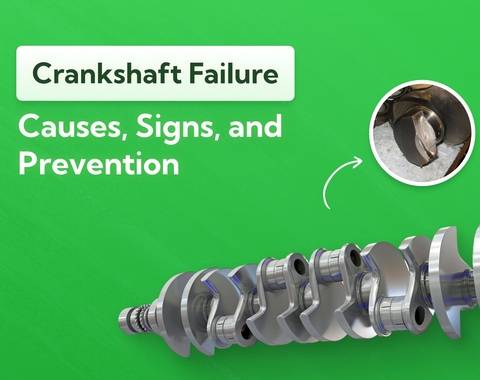
A crankshaft is the engine’s main rotating shaft, which turns the violent up-and-down movement of the pistons into rotational energy the vehicle uses to move forward. That rotation drives everything: the flywheel, the gearbox and the wheels.
It also works as the engine’s internal “stabiliser”, using counterweights to balance vibrations so the whole unit runs smoothly rather than shaking itself to bits. Most are made from forged steel or high-grade cast iron because they’re constantly absorbing huge loads, rapid heat changes and repeated stress cycles.
The crankshaft sits low in the engine block. It’s supported by bearings and constantly bathed in oil to keep friction under control. If it wears, bends, cracks or isn’t properly lubricated, the entire engine loses its ability to operate safely.
In other words, if the crankshaft goes, the engine goes with it.
What are the causes of crankshaft failure?
Crankshafts fail because of poor lubrication, sloppy maintenance, misalignment inside the engine or abnormal combustion events that hit the crank with more force than it was designed to handle.
So it’s not just going to snap out of nowhere; if the crankshaft fails, it means something upstream has been stressing it for a long time. Once those stresses build, the crankshaft’s bearings, journals and counterweights start to suffer. That’s when real damage begins.
Let’s have a closer look at what causes this:
- Fatigue failure: This happens when the crankshaft has faced the same cyclic stress of bending and twisting loads thousands of times per minute. Each cycle creates microscopic cracks in the metal. If the load isn’t distributed evenly – for example, due to worn bearings or slight misalignment – those tiny cracks grow. Over time, the crankshaft weakens in that exact spot until it finally gives way. It’s not sudden, either; if your crankshaft has snapped, it means the damage has already been accumulating for months or years.
- Overloading and excessive torque: When an engine is over-fuelled, aggressively tuned or repeatedly pushed beyond its safe limits, the torque spikes hit the crank journals and counterweights hard enough to distort them. That extra twist can start hairline cracks and overload the bearings. Over time, those cracks propagate with every rotation until the crankshaft finally snaps. Once the shaft starts moving away from its perfectly straight rotational path, outright fracture becomes a matter of when, not if.
- Bearing failure: The crankshaft spins on main bearings and connecting rod bearings, and those thin layers of metal are responsible for keeping the crank centred and properly supported. When they lose lubrication or sit even slightly misaligned, the crankshaft stops rotating on a true axis. When it contacts surfaces unevenly, it builds heat and sees sharp spikes in load. Low-quality bearings break down faster, allowing more of the metal-to-metal contact that eventually causes the crank to fail outright.
- Improper engine assembly: If the crank is installed slightly off-centre, the bearings aren’t aligned or the rotating assembly isn’t balanced correctly, the shaft ends up fighting abnormal loads from the moment it turns. If the mechanic doesn’t follow the proper installation procedures to a tee, mistakes like an incorrect torque setting or missed alignment check will create uneven forces on the journals and fillets. Then, the stress starts building again with every rotation.
- Crankshaft misalignment: When the shaft isn’t perfectly in line with the engine’s main bearings, the journals load unevenly and oil clearance varies from one side to the other as the crank rotates. Because of that, even a tiny offset causes the bearings to wear down unevenly. The friction resulting from this raises the operating temps and increases metal fatigue in the crank itself.
What are the signs of crankshaft damage?
When you have a problem with the crankshaft, your engine will always give you an early clue in the form of a cylinder misfire or a drop in power. You might think those signs are nothing to worry about, but ignoring them is precisely how drivers end up with catastrophic, engine-ending damage.
Below are the clearest signs your crankshaft is starting to fail and needs immediate attention:
- Engine knocking or tapping sounds: As bearings wear down, become misaligned or lose their oil film, the crank journals physically strike the bearing surfaces with each rotation, instead of gliding smoothly. That metal-on-metal contact creates the dull engine knock or sharp tap you hear. It’s especially pronounced when you’re driving under load or revving the engine, and it’ll get progressively louder the longer you ignore it.
- Persistent vibration during operation: When a crankshaft is damaged or its bearings are wearing unevenly, the rotating assembly loses balance and those vibrations travel through the engine mounts, chassis and even the steering wheel. Every car vibrates a little, but if you notice it’s harsher, more rhythmic and gets worse as the revs climb, it’s either crankshaft failure or another serious problem (like issues with the flywheel or harmonic balancer). To pinpoint the exact cause and prevent further damage, take the car to the garage sooner rather than later.
- Loss of engine power and acceleration: When a damaged crankshaft can’t rotate smoothly or maintain proper timing between the pistons, the engine loses some of the force that it’s supposed to transfer to the flywheel and wheels. Because the crankshaft is responsible for turning piston motion into usable torque, any disruption in its rotation shows up immediately as sluggish acceleration and reduced overall performance.
- Engine misfires due to crankshaft damage: Misfires happen when the crankshaft isn’t rotating with perfect stability or the crankshaft position sensor can’t read its movement accurately. The ignition and fuel injection systems rely on the crankshaft’s exact position to time each spark and injection event. If the crankshaft is worn, cracked, deflecting under load or its sensor is receiving inconsistent signals, the timing goes out of sync and the cylinder fires off too early or too late.
And while these are the earliest signs, there are two others you need to take incredibly seriously: low oil pressure and metal shavings in the oil. If the red oil warning light comes on, pull over immediately. It means the engine isn’t getting enough pressurized oil for lubrication and your engine is about to overheat and seize.
How to prevent crankshaft damage
Regular servicing, proper lubrication and using the right oil grade do more for crankshaft health than anything else. Driving habits matter too; if you’re constantly flooring the gas and running low on oil it’ll pile stress onto the rotating assembly. And when you’re replacing bearings or related parts, quality really does matter.
So, while crankshaft failure is one of the most brutal issues you can have with your car, a little discipline goes a long way.
Regular maintenance and inspections
Periodic checks give you the opportunity to spot bearing wear, oil pressure issues and small leaks long before they devolve into a crankshaft failure. You don’t need a weekly inspection, but sticking to service intervals matters. Every 5,000 to 7,500 miles or 6 to 12 months (whichever comes first) for oil changes is a safe rule of thumb for most UK cars.
During routine servicing, have the mechanic look at the oil condition and listen for bottom-end noises. And if your car has higher mileage or a hard-worked engine, bearing clearance checks during deeper servicing are worth it for your overall engine health.
Proper lubrication and oil quality
The crank spins at high speed on a thin film of oil, and if that film breaks down because you used the wrong viscosity, chose a cheap oil, let the level run too low or are constantly overdue on changes, the journals and bearings eventually start grinding themselves apart.
Always use the manufacturer-recommended oil grade (find this in your owner’s manual) and never stretch service intervals. High-quality oil keeps the pressure right and protects the crankshaft under heat and load.
What the experts say

Steven Jackson OBE

Avoiding overloading the engine
The extra strain you put on the car when you tow beyond its limits, sit in too high a gear at low speeds or constantly floor it from a standstill forces the crankshaft to absorb violent torque spikes it can’t sustain forever. Eventually, temps rise too high and the bearing load is too great.
Keeping the engine within its intended load range and driving it as gently as possible will go a long way towards preventing the stress that causes overheating, bearing wear and premature crankshaft damage.
Driving habits to reduce crankshaft strain
The main advice here is to avoid harsh acceleration, abrupt braking and unnecessary high RPMs. All of these things will sharply increase the amount of force travelling through the crankshaft and its bearings.
- Smoother throttle inputs keep torque loads predictable.
- Letting the engine warm up before pushing it reduces metal fatigue.
- Shifting gears appropriately prevents the crank from labouring or overspinning.
These small habits accumulate over time, and they’re exactly what help the crankshaft, bearings and entire bottom end last far longer.
Using quality engine parts and assembly
Cheap bearings, off-brand bolts and poorly machined components won’t hold tolerances as well, which increases the risk of misalignment, poor oil clearances and uneven loading on the crank journals. A crankshaft is only as good as the parts supporting it.
This is why you should only go for the OEM or the highest-quality aftermarket components built to your engine’s exact specifications. When you pair that up with proper torque settings, clearances and a careful assembly, your crankshaft will rotate smoothly on a true axis and stay fully supported by its oil film, both of which drastically reduce its chance of snapping.
How much does it cost to fix a crankshaft?
Simple jobs like replacing a crankshaft position sensor sit at around £120 to £300, but a full crankshaft replacement will push at least £1,000 to £2,000+ because it’s a major engine teardown.
Costs vary depending on whether you’re replacing a pulley, repairing journals or fitting a totally new shaft. They also fluctuate with your car’s make, model and the going labour rates in your area. Engines that need to be completely removed naturally push the bill up even further.
Average cost of crankshaft repair (UK, 2026)
On average, crankshaft repairs cost anywhere from £120 on the low end to £2,000 on the high end, depending on what you need. The reason this varies so much is that ‘crankshaft repair’ could actually mean a few things: replacing the position sensor, replacing the front/rear oil seals or doing machine work on the existing part.
Your final bill will also depend on the car you drive, where you live and the parts you choose. Larger engines and premium brands take longer to strip down and need pricier components, so labour hours and part costs shoot up.
Location also matters because garages in London and the South East charge far £100+ hourly rates, compared to £50 to £80 in smaller towns. And if you opt for OEM parts rather than budget aftermarket components, your bill rises (though you’ll get better fitment, longer life and fewer repeat problems).
Crankshaft replacement cost
A straightforward crankshaft replacement typically sits around £1,000 to £2,000+, but a full engine rebuild or engine swap after a crankshaft snaps will climb anywhere from £2,000 to £5,000+. It’s one of the most expensive bottom-end repairs you can possibly face.
The reason it varies by several thousand pounds is that crankshaft replacement costs swing heavily depending on how much bottom-end work the engine needs. In a perfect world, you’d swap the crankshaft and call it a day, but that’s rarely how these repairs play out.
Once the engine is apart, the mechanic has to clean and inspect the bearings, journals, connecting rods, oil passages and the block itself. If the crankshaft failed violently or snapped (which happens in many cases), there’s usually widespread collateral damage. The more collateral damage, the more bottom-end machining that’s needed.
And just like with the repairs, the figure also depends on your car’s make and model, the parts used (OEM vs aftermarket) and how much labour is involved.


Should I fix my failed crankshaft?
To answer that question, you need to weigh the repair bill against your car’s current value and consider whether the engine is healthy enough elsewhere to justify a major bottom-end job.
If the quote approaches or exceeds the vehicle’s market value, or if the engine has high mileage and other looming repairs, sinking more money into it doesn’t make any long-term sense. But if the rest of the car is solid and the repair cost is proportionate, fixing it can still be a viable option.
Basically, deciding whether to fix a failed crankshaft comes down to simple maths and a bit of realism.
When should I fix the crankshaft?
If the engine is otherwise totally healthy, the mileage is under 100,000 and the repair quote sits below 50% of the car’s market value, a crankshaft job will give the vehicle a long new chapter and restore its resale value.
It’s also a viable option when damage is limited to bearings and journals rather than a full bottom-end meltdown. In these cases, the cost aligns with the car’s lifespan and the repair actually adds value.
When scrapping the car is a better option?
Scrapping becomes the smarter move when the repair cost is close to or higher than 50% of the car’s current value. This is a common scenario for older or high-mileage vehicles. It can also happen if your car’s middle-aged but the crankshaft snapped and took the bearings, rods or the whole engine block with it.
Add upcoming MOT issues you need to fix and throw other ageing components into the mix, and pouring thousands into a dying engine doesn’t stack up at all. In those situations, scrap your car, cut your losses and move on without throwing good money after bad.
Frequently asked questions
Yes, a crankshaft failure will cause complete engine failure if the crank snaps or the bearings collapse. When this happens, the pistons and rods lose their timing and support, which causes internal components to collide. In severe cases, the engine seizes instantly and cannot be repaired without major rebuilding or full replacement.
If you drive with a damaged crankshaft, it will almost certainly lead to catastrophic engine failure. As the crank wears or cracks, the bearings lose support, oil pressure drops and metal fragments begin to circulate through the engine. Each rotation increases the chance of the crankshaft snapping, which will completely ruin the block, rods, pistons and oiling system.
A crankshaft typically lasts between 150,000 and 200,000 miles, but can last the entire life of the engine when it’s properly lubricated and maintained. Failures usually stem from external issues like oil starvation, bearing wear, overheating and improper assembly, not from the crankshaft simply “wearing out”.
Yes, crankshaft damage is normally covered by vehicle warranties in the UK, but only under the right circumstances. Most manufacturer and extended warranties list the crankshaft as a covered major engine component, meaning genuine mechanical failure should be eligible.
However, policies usually exclude damage caused by poor maintenance, low oil, missed services, incorrect repairs and anything deemed as ‘driver neglect’. Always read the small print because crankshaft claims are scrutinised closely and you’ll need the full service history to avoid a rejection.
You can extend the life of your crankshaft by keeping the engine properly lubricated, sticking to regular oil changes and checking the oil level every few weeks. Gentle driving habits help too; avoid constant high RPM, putting the engine in too high a gear and accelerating too hard.
Make sure any engine work is done with quality parts and correct torque settings as well, because misalignment and cheap bearings will wear down faster, cutting your crankshaft’s life in half.
Also, deal with small issues early. Vibrations and tapping sounds won’t fix themselves, but your crankshaft will eventually snap if you don’t fix them.
About Car.co.uk

Share on
Latest news & blogs