How to Check if Your Car Fuse is Blown
A blown car fuse can shut down your car’s most essential internal systems without warning. Most of the time, it’s a simple fix, but it’s also something you can’t ignore. Learn everything you need to know about blown car fuses below.
Last updated: 7th January, 2026

Anthony Sharkey is COO at New Reg Limited (Car.co.uk, Trader.co.uk, Garage.co.uk), driving innovation in vehicle recycling, logistics, and customer experience.
Listen to this story
A car fuse is a small but critical safety component. It protects your car’s wiring and components by cutting power when a circuit draws too much current. If something overloads, the fuse blows as a safety measure to protect the more expensive wiring and control units from damage.
Blown fuses are one of the most common causes of electrical failures in cars. Headlights might stop working. The air conditioning can cut out. Dashboard lights, interior lights and power sockets can suddenly go dead. It’s annoying, but it’s usually not serious.
This guide explains what a blown car fuse is, what causes it and how to spot one. It also covers how to fix the problem and what fuse box replacement costs look like if you need professional help.
What's in this article
Why does a fuse box stop working?
The fuse box (or fuse panel) is there to protect your car’s electrical system. Every circuit running lights, controls and accessories passes through it. When something goes wrong, it’s not usually because the fuse box has failed, but because it’s reacting to a problem elsewhere.
Here are the most common reasons a fuse box appears to stop working:
- Overloaded circuits: This happens when too many electrical components are drawing power from the same circuit at once. The total power demand exceeds what the circuit is designed to handle, so the fuse blows to prevent overheating. It’s common after fitting aftermarket accessories such as dash cams, heated seat kits, LED light bars, subwoofers, or phone chargers wired into an existing circuit.
- Short circuits: These occur when electricity bypasses the intended wiring and flows directly to ground. This is usually caused by damaged insulation, trapped wires or components that have failed internally. For example, a wire rubbing against metal behind the dashboard or in the engine bay would create an instant surge of current. So, unlike overloads, short circuits cause fuses to blow immediately and repeatedly because the spike is sudden and severe.
- Ground faults: In this case, electricity leaks into the vehicle’s body rather than flowing through the intended wiring. Water ingress, moisture around connectors and exposed wires are the common triggers. Some circuits (specifically those in EVs and plug-in hybrids) have extra protection similar to GFCI systems, but most standard automotive circuits do not. That makes ground faults harder to detect.
- Age and deterioration: Fuses weaken over time and resistance builds up in old wiring, even without corrosion (though that happens sometimes, too). They’re designed to last the lifetime of a vehicle unless there’s an electrical fault, but if your vehicle’s life is already pushing past 20 to 30 years, it was never designed to handle the electrical demands for that long. As your car’s components age, fuses will blow more easily, even under normal loads.
- Faulty installation: If you’ve just had your car repaired or modified, this is most likely the root cause. Incorrect wiring, loose terminals, poorly crimped connectors and fitting a fuse with too high or too low a rating can all create problems. These issues will show up as intermittent failures or fuses that keep blowing without an obvious reason, and they usually do so suddenly after the work has been done.
Signs your car’s fuse box has problems
Fuse box issues almost always start small, then slowly snowball into wider electrical problems. But ignore the problem long enough and you’ll end up with multiple systems failing at the same time or a car that won’t power up at all.
Knowing the early signs makes a big difference. There are obvious signs and not-so-obvious ones.
Obvious signs
The three obvious signs of car fuse box problems are:
- Blown fuses or tripped circuit protection: If a fuse keeps blowing or a resettable circuit breaker keeps cutting out, something isn’t right. One failure might be bad luck. Repeated failures point to an underlying electrical issue that needs attention.
- Complete power loss to certain systems: When specific components like the headlights, indicators, radio or windows stop working entirely and don’t come back on, the fuse supplying that circuit is the first place to check.
- No power to the entire vehicle: If nothing electrical responds at all, the problem may involve the main fuse, battery feed or fuse box connections. This is less common, but when it happens, it’s usually serious.
Subtle warning signs
The above symptoms point directly to an electrical fault involving the fuse box. These are less clear because they could mean other issues as well, but are always worth paying attention to if you suspect fuse box issues:
- The same fuse keeps failing: Replacing a fuse only for it to blow again is a red flag. Fuses don’t fail repeatedly without a reason. This often points to a short circuit, ground fault, or overloaded circuit.
- Burning smell near the fuse box: A faint burning or plastic smell around the fuse panel is never normal. It can indicate overheating wires, melting insulation, or poor connections generating heat.
- Buzzing or crackling sounds: Electrical noise coming from the fuse box suggests arcing or unstable connections. You might hear it faintly with the engine running or when electrical systems switch on.
- Warm or hot fuse panel: The fuse box should never feel hot to the touch. Heat buildup usually means excessive resistance or current flow, both of which can lead to failure.
- Scorch marks or discolouration: Darkened plastic, melted fuse slots, or burn marks are clear signs of overheating. At this point, replacing fuses alone won’t fix the problem.
- Flickering lights: Interior or exterior lights that flicker can indicate loose connections, voltage drops, or early-stage electrical faults within the fuse box or its wiring.
How to fix a non-working fuse box
Good news is, most fuse box problems aren’t as serious as you’d think. Most of the time, the fix is something you can do safely at home with basic tools. You don’t need to be an auto electrician to check a fuse.
That said, a quick safety check matters. Always switch the engine off and remove the key before touching the fuse box. Wear gloves while you’re working, and use your owner’s manual to locate the correct fuse panel and circuit layout.
The steps below walk you through the process. You’ll identify the faulty fuse, replace it with the correct type and rating, and then check that power has been properly restored. If the fix holds, you’re done. If it doesn’t, you’ll know it’s time to look deeper or call in professional help.
1. Power off the supply.
Start by disconnecting the car battery’s negative terminal. This cuts power to the electrical system and protects you from shocks, short circuits or accidentally blowing another fuse while you’re working. It’s a small step that prevents very avoidable damage.
2. Identify the problem fuse or component.
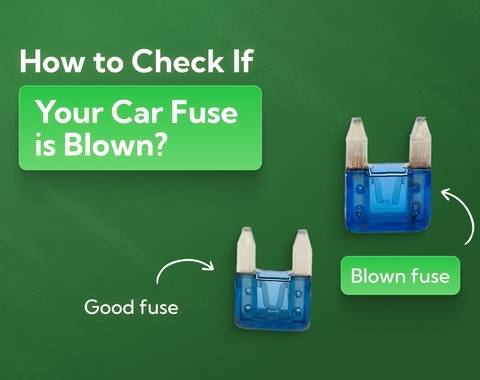
Next, locate the fuse box and find the fuse diagram in your owner’s manual. This tells you exactly which fuse controls which circuit. Look for a blown fuse by checking for a broken metal strip inside or visible discolouration. A fuse puller makes this easy, but small pliers work if you’re careful.
3. Replace the fuse (if that’s the issue).
If you’ve found a blown fuse, replace it with one of the exact same amperage rating (e.g. 10A). Never fit a higher-rated fuse to ‘solve’ the problem. A fuse is designed to fail before the wiring overheats. If you install a higher-amp fuse, the wire can overheat instead, and you risk melting the insulation, damaging control units and potentially causing an electrical fire.
4. Restore power and test.
Reconnect the battery’s negative terminal and switch the ignition on. Test the affected system – lights, radio, windows or whichever circuit caused the issue. If everything works normally and the fuse holds, the repair is finished.
If the new fuse blows again shortly after replacement, stop here. That’s a strong sign of a deeper issue like a short circuit or wiring fault, and it’s time for professional diagnosis.


How much does it cost to repair a car fuse box or breaker panel?
In the UK, repair costs can range from as little as £20 to £50 for replacing a single blown fuse, all the way up to £300 to £1,000+ for a full fuse box replacement on modern vehicles. Where you land in that range depends on your car, the quality of parts used and local labour rates.
Also keep in mind that replacing a fuse box isn’t just about getting something working again. It’s a preventive decision as well because a damaged or overheating fuse panel will cause repeated electrical faults if you leave it in place.
Costs vary because some fuse boxes are simple and easy to access, while others are integrated with control modules, buried behind trim or require recalibration. Labour time and vehicle complexity are what really move the needle.
Accurate diagnosis is what saves you money. If you replace fuses blindly or swap parts without confirming the fault, you’ll spend unnecessarily on repairs you don’t need. It’s worth getting quotes from more than one garage and, if your car is under warranty, check first because electrical work that’s carried out incorrectly will affect your future insurance cover.
Replacement costs by component
Fuse-related repairs vary a lot depending on what actually needs fixing. Sometimes it’s a single sacrificial part doing its job. Other times, the fuse box itself is damaged and needs replacing.
The table below shows typical UK cost ranges, from the smallest fixes to more involved electrical work.
Fuse box component replacement costs (UK, 2026)
Factors affecting car fuse box replacement costs
Fuse box replacement costs move for specific, predictable reasons. Some are about the car itself and others come down to labour and compliance.
- Panel size and amperage: Basic vehicles have simple panels with low electrical demand. Newer cars pack in higher-amperage circuits to support things like infotainment systems, driver-assistance features, heated seats and electric accessories. Higher-capacity fuse boxes cost more and often take longer to fit.
- Vehicle wiring complexity: The more complicated the electrical system, the higher the labour cost. Modern cars sometimes have multiple fuse panels, integrated control modules and networked systems that need programming after replacement. Older vehicles are simpler, but age introduces its own problems, like brittle wiring.
- Accessibility of the fuse box: Some fuse boxes are easy to reach under the bonnet or behind a trim panel. But if yours is buried behind the dashboard, footwell or body panels, labour time (the biggest cost driver) will add up quickly.
- Local labour rates: Independent garages in smaller towns charge less per hour than main dealers and specialists in major cities. On top of that, auto electricians cost more than general mechanics, but they’re also faster and more accurate with electrical faults.
- Coding, testing and compliance checks: Unlike home electrical work, cars don’t require permits. Modern vehicles do require coding, system resets and post-installation testing, though. These steps add time and cost, particularly when manufacturer-specific diagnostic tools are needed to complete the job.
- Related repairs uncovered during replacement: Fuse box replacement sometimes reveals underlying issues like damaged wiring, corroded terminals and previous repairs that were poorly done. You might not have seen it upfront, but you’ll have to pay for it on the final bill once work begins.
DIY vs professional costs
Basic fuse-related jobs are perfectly safe to handle yourself, but anything more than that is a professional’s job. Knowing the difference will save you money – but more importantly, it’ll save you from making an expensive mistake that ruins your car.
- What you can do yourself safely: Checking and replacing a blown fuse is well within DIY territory. With the ignition off, the battery disconnected and the owner’s manual to hand, you can identify a failed fuse and swap it for one with the same amperage rating. This costs very little and carries minimal risk. Visual inspections for obvious corrosion or loose fuses are also fine.
- What requires a professional: Leave anything beyond basic fuse replacement to a qualified auto electrician. That includes fuse boxes that keep blowing, signs of overheating, melted terminals, wiring faults and full panel replacements. Modern vehicles need diagnostic tools, coding and post-repair testing as well, which you almost definitely can’t do yourself.
- Potential savings vs. risks: DIY work can save you £50 to £100 in labour on simple fuse jobs. But the risk climbs quickly for damage repairs and extensive jobs, where one wrong move might lead to module failure or start an electrical fire. It’s not worth destroying your entire car to save a few hundred quid at the garage.
What the experts say

Steven Jackson OBE

Is a car fuse box worth fixing or replacing?
In most cases, the decision is straightforward once you look at the pattern of the fault.
Repair is the right call when the problem is limited and clearly identified. A single blown fuse, loose connection or light surface corrosion are things you can fix for cheap. And if the fault doesn’t return after repair and the surrounding wiring is in good condition, you’re good to go.
Replacement is the only option when you have recurring faults or physical damage. Melted plastic, scorched terminals, warped housings and fuses that keep blowing point to internal failure. Particularly on older cars and those with lots of aftermarket electrical additions, replacing the fuse box is the only way to restore its performance.
Since the job is so inexpensive, it’s almost always financially worth it to replace a blown fuse. But if your car’s already 10+ years old and you need a full fuse box replacement (which could cost £1,000+), it’s usually better to scrap your car. Do the math: if the repair costs add up to more than 50% of your car’s current market value, scrap it.
Frequently asked questions
If power returns after resetting it, that means the breaker was just tripped. If it won’t reset or trips immediately again, it’s either faulty or responding to a deeper electrical issue. A bad breaker may feel loose, show burn marks or fail to hold under normal load, which points to replacement rather than reset-and-go.
You cannot replace a fuse box with a circuit breaker panel yourself – only a qualified auto electrician should do this. Replacing a fuse box involves live circuits, and you’ll need to know the correct ratings, how to securely mount the electrical components and how to code the system. Getting it wrong risks damage to control units and can create a serious fire hazard.
Fuses don’t have a set replacement interval and should only be changed when they blow or show signs of damage. Breakers and fuse panels typically last the lifetime of the vehicle, so heat damage, corrosion and electrical faults are what will tell you they’re due for replacement.
If your breaker keeps tripping with nothing plugged in, it’s because the fault is in the wiring or component itself rather than an accessory you’ve added. Common causes include a short circuit, damaged insulation, moisture ingress and a failing component that’s drawing power even when nothing obvious is switched on.
A fuse is a one-time safety device that melts and has to be replaced, while a circuit breaker trips and can usually be reset. Both protect the circuits, but fuses are simpler and more common in cars, whereas breakers are typically used on higher-load and resettable systems.
Most fuse boxes or breaker panels last the life of the vehicle, often 15 to 30 years, if they’re not overheated or modified. Heat damage, corrosion, or repeated electrical faults can shorten that lifespan significantly.
No, a breaker or fuse box should not feel warm during normal operation. Warmth usually means there’s excess resistance, loose connections or current flow that’s too high for the circuit, all of which require a professional inspection.
Yes. A faulty breaker or damaged fuse box can definitely fail to cut power when it should and allow the wiring to overheat. That’s how minor electrical issues turn into bigger issues like melted looms or, in the worst-case scenario, vehicle fires.
About Car.co.uk

Share on
Latest news & blogs